
UX articles that stood out in 2025
In a year full of new tools, frameworks and conversations, these UX articles stood out to the RGD's XD Advisory Group for all the right reasons.
Each of the picks challenges how we think about strategy, design and the real-world experiences we’re responsible for shaping.
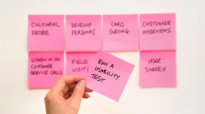
Make Time for Ideation [Templates + AI Prompts]
Recommended by Aaron Neilson-Belman RGD
“Ideation is usually the first stage to get squeezed when timelines are tight, and I’ve definitely been guilty of rushing into solutions before giving ideas room to develop. This article reinforces why carving out intentional space for exploration is so important. It offers a strong mix of practical frameworks, structured exercises and well-crafted AI prompts that encourage broader, more exploratory thinking instead of defaulting to familiar solutions. A helpful reminder to pause, breathe and explore before diving into execution.”
Journey Management Playbook
A limited series by Service Design Show
Recommended by Geneviève Metropolis RGD
“2025 was the year of journey management for me—a topic more familiar in CX circles but highly relevant to UX. This podcast series is an essential primer that gets into the weeds with hands-on skills and practical examples that helped level up my practice. I learned how to transform complex static experience maps into focused evergreen dashboards that connect UX insights and opportunities with business challenges. If you’re curious about journey management, this series offers a rich deep-dive!”
The Strategist's Shame
Recommended by Katrina Lovrick
“This essay really hit home for me—working in UX, we can do a significant amount of strategy, research and user engagement. Purpose matters more than the appearance of doing "UX" and "Strategy". Too often, we can hide behind templates, tool sets and frameworks that deliver no real meaning besides to "create the illusion that complexity has been mastered." It reminds me to question where the performance is in my work. Where am I doing things that look like strategy, but might not be delivering actual strategic value? And what could I do differently?”
"The Edge Cases that Break Hearts (And Products)" by Nielsen Norman Group
Recommended by Elia Kanaki RGD
“This article hit different because it addresses stuff we all know exists but somehow never prioritize.
The piece focuses on scenarios most teams conveniently forget about during design sprints: name changes, divorced parents sharing custody calendars, people losing their phones abroad, dealing with deceased users. And here's the thing—these aren't rare edge cases. They're happening to real people every day. We just call them "edge cases" because they happen to different people, so they never feel urgent enough to fix.
What I appreciate is that it doesn't preach about empathy or user-centricity. It just states the obvious: if your product can't handle these situations, you're actively making someone's terrible day even worse. A name change isn't an edge case when you're the person dealing with it. Death isn't theoretical when you're suddenly locked out of shared accounts or getting automated reminders to invite your deceased spouse to collaborate.
The article gives you actual solutions—to make things editable everywhere including URLs, plan for transitional periods where both old and new identifiers work, build safety features upfront instead of patching them after someone gets hurt. These problems are solvable, and the fixes are straightforward.
But the bigger point sticks with you: what we dismiss as "edge cases" are usually just scenarios we'd rather not think about. This piece makes you face the gap between the clean user flow you mapped out and the messy reality people actually live with”
From Design Thinking to Experience Thinking: A Transformative Approach
Recommended by Athena Herrmann RGD
“This article is about thinking holistically about experiences across channels and departments and explains why to truly create experience that meet user expectations, connections across teams must first be made. People move across platforms and channels, sometimes multiple times and fragmentation can create a lot of friction and frustration.”
Simplifying your product strategy is a competitive advantage
Recommended by Samiksha Makhijani RGD
“I love this article because it uses the relatable analogy of a knife to show how powerful products are created by removing complexity, not adding more. It reminds us that strategy isn’t about doing everything—it’s about sharpening focus so the product does one thing exceptionally well.
Even though it’s not directly positioned as a UX article, it beautifully reinforces a fundamental UX principle: simplicity, especially when designing complex workflows. It shows how reducing friction, clarifying intent and eliminating unnecessary choices leads to products people trust and intuitively understand. This mindset is essential for building elegant, user-centred experiences in any industry.”
UX Leadership and Strategy: A New Direction
Recommended by Richard Plantt RGD
"This is a concise, clear wake-up call for designers who want their work to move beyond screens and influence how organizations behave. It reframes UX as a strategic, organizational discipline and not just wireframes and interfaces.
This article nails a frustration I’ve felt for years: talented designers getting boxed into “make it pretty” roles when we have the insight to shape how products and experiences actually work. It argues that modern designers need to step into strategic territory, guiding decisions, shaping processes and influencing how organizations think about users.
That resonates with my own journey moving from pure visuals into UX leadership. The best work I’ve done hasn’t just been about layouts and typography; it’s been about aligning teams, improving communication and driving choices that genuinely help users.
This piece validates that direction and reminds me that our craft has far more impact when we’re involved earlier and more broadly. It’s a key read for anyone who wants to grow beyond execution and become a creative leader who actually changes outcomes."
Tag
Related Articles








Sponsored


