Designing tasty stories with Erika Barbieri
Episode 6 — DesignThinkers Podcast, Season 5

Erika Barbieri has spent most of her career thinking about what goes around food. She is the co-founder and creative director of OlssønBarbieri, a design studio in Oslo that treats a bottle, a bag or a coffee box as a way into much bigger conversations about where food comes from and how we live with it.
In the latest episode of the DesignThinkers Podcast, Erika sits down with host Nicola Hamilton RGD, RGD President, about her DesignThinkers talk, “Tasty Stories.” They get into how the studio started, why research comes before any design, and what it took to win Best of Show at the 2026 Dieline Awards.
Two designers, one final exam
Erika and her partner Henrik met at design school in Florence. The program accepted only 25 students, and some of the people teaching there came out of the Italian radical design movement. They were both trained in product design, and by the end of the five years they had even done their final exam together.
Neither wanted to make furniture. Food felt more interesting, and packaging sat somewhere between product and graphic design. Henrik is from Oslo, Erika had lived in Florence all her life and was ready to try somewhere new, so they moved to Norway right after school. A creative collective with some of Henrik’s friends didn’t last long. Starting their own studio came next, with what Erika calls a bit of naivety. They made it official in 2012, after about seven years of working together. “I do believe in those cycles of seven years,” she says.
One of their first projects was for wine, which turned out to be lucky timing. Packaging had a reputation as the commercial, marketing-driven end of design. But Norway doesn’t produce wine, so there was less tradition to follow, and younger drinkers were starting to care about it. The goal was to find a new language for wine instead of following the usual codes. A change in the rules around 2005 that let independent producers make spirits opened up the same kind of room.
They decided not to specialize in beverages. Food, Erika says, has plenty of space left to rethink the codes of each category.
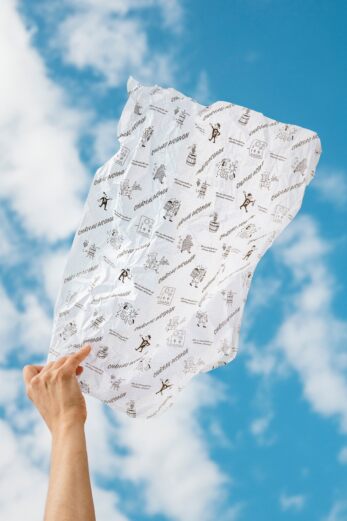
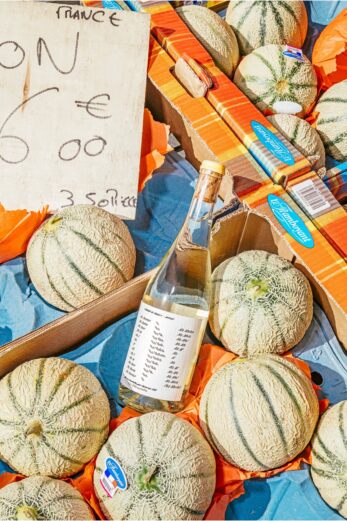
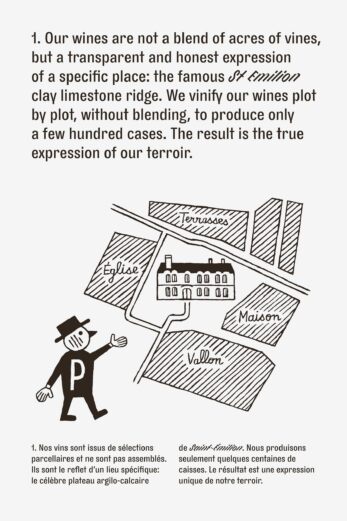
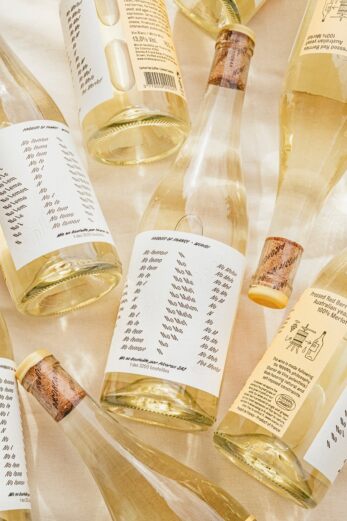

“At the time, packaging design wasn’t considered very sexy. It was seen as commercial, marketing-driven, not very creative. We found a place where we could challenge that.”
Erika Barbieri, Co-founder and Creative Director at OlssønBarbieri
Research first, then the story
Neither Erika nor Henrik ever worked in another studio, so they worked out their process the hard way. It starts with research. Erika studied art before design and admits she loves a rabbit hole. Research leads to a story, and the story leads to the design. If you work only from visual references, she says, you can end up repeating yourself very easily.
She gives Stereoscope Coffee, a roaster based in Los Angeles, as an example. Every coffee brand seemed to be talking about the same things, so the studio went looking for what nobody wants to bring up. That meant colonialism and the commodification of coffee. They also read the philosopher Emanuele Coccia on plants, and learned that coffee itself could one day disappear because of climate change. The challenge was turning all of that into something that felt positive for the client and not upsetting.
Clients feel the difference, Erika says. The studio splits a project into about four phases, and in the first one they don’t design anything. They talk strategy and storytelling. Some clients have told her it felt like going to a psychologist, where someone gathers your thoughts and hands back what was in your head all along.
Varus 775 and the refill ritual
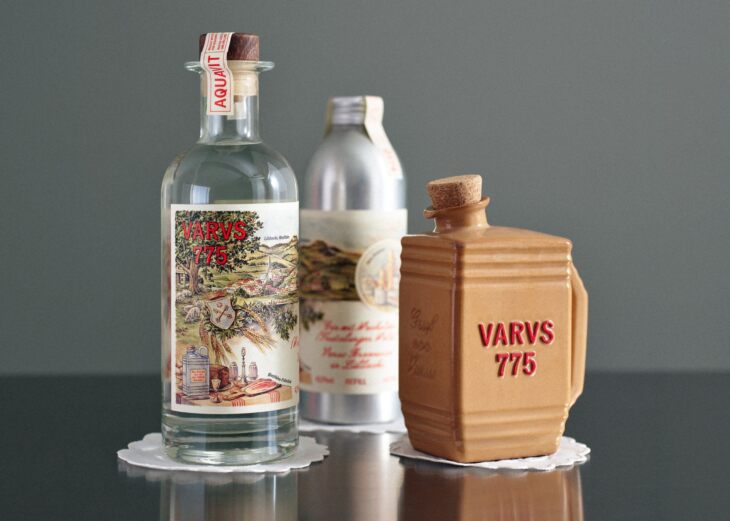
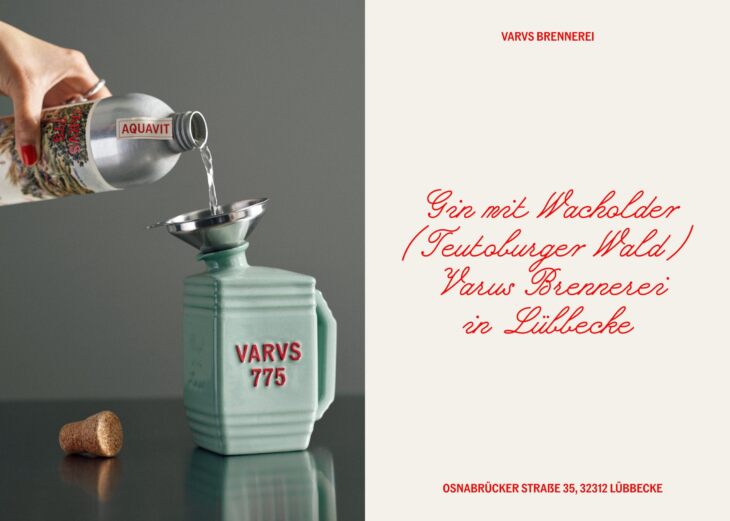
Nicola brings up Varus 775, the spirits brand that took Best of Show at the 2026 Dieline Awards, the first spirits brand to do so since 2019. The distillery already had the name Varus. It comes from the Battle of the Teutoburg Forest in 9 AD, fought near their home village of Lübbecke, when the Roman general Varus was defeated and Rome’s expansion into Germanic land stopped.
The client didn’t want to talk about war, so the studio went looking for what was positive in that history. They found that the two sides had been trading partners and allies, and that the Romans brought ideas of the good life along with goods. That led them to the ceramic vessels that local spirits like Genever were kept in. A plain glass bottle no longer felt right.
The result is a ceramic vessel you refill from an aluminum bottle. The idea turned drinking into a small ritual, which is something Erika didn’t see explored much in the spirits world.
Sustainability is more than one material
Erika says sustainability has become an inseparable part of design, but it’s hard to do with a single product. You need a client who is open to rethinking production, how materials are sourced and how things are distributed. When that isn’t possible, you can still be careful with what you put out there. That might mean fewer materials in a closure or skipping a secondary box. And if an object is beautiful, people tend to keep it.
“Beauty is always an aspiration for the object. As someone once put it, the opposite of beauty isn’t ugly, it’s lazy.” — Erika Barbieri, Co-founder and Creative Director at OlssønBarbieri
Food packaging also has to work in real life. Labels get wet in the fridge, boxes get shipped and stacked, and online orders arrive at someone’s door. Erika adds one more test: with food, you usually want to leave the package out on the counter, so it has to be something people want to keep looking at.
Tasty stories
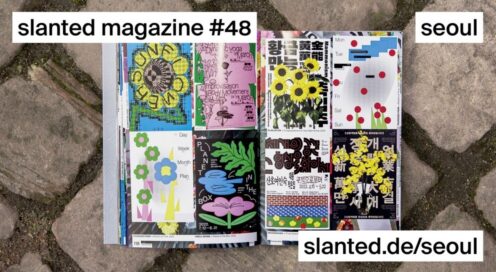
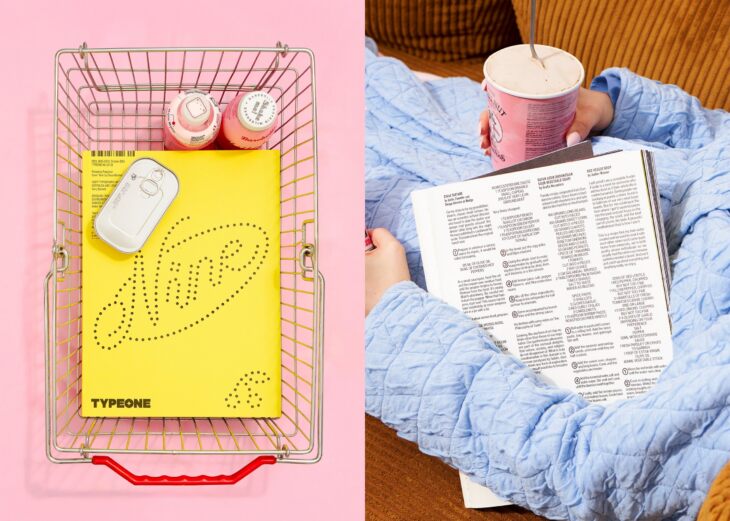
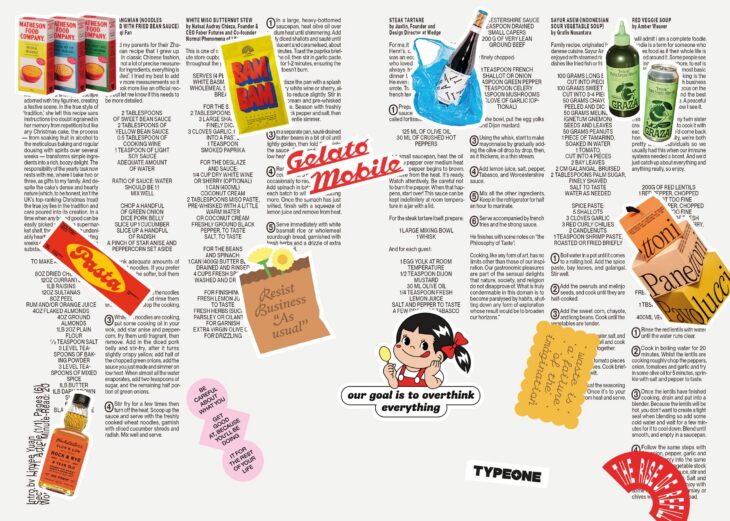
Her DesignThinkers talk grew out of an issue of Type One magazine the studio was invited to edit two years ago, which looked at typography through the lens of food packaging. Nicola asks whether design can make something taste better. Erika’s answer is that “tasty” opens up bigger questions. Food is more delicious when it is well made, when the people behind it are treated well and when it’s healthy.
The studio’s own makeup shapes that. Its team includes Norwegian, Italian and Indonesian designers, and since Tia joined as a partner two years ago, there’s a rice cooker at the studio and lunch is made every day. Erika says it’s a reminder that Italian food isn’t the only good food out there, and that other food cultures belong in the conversation too. The studio is four people, plus a cat named Marcello.
One thing food brands should stop doing
Nicola asks what bothers Erika most about how food brands talk to people. She remembers a sandwich on a flight, wrapped in plastic, with a story about a grandmother making the cheese and bread. If something is made to be preserved and eaten on the go, she says, be honest about that. Her other example is chocolate packaging with extra empty space to look bigger. Does bigger really mean better value?
“If it’s food that’s wrapped in plastic, made for on the go, don’t tell me it’s authentic, like someone in a bakery made it. I don’t connect those.”
Erika Barbieri, Co-founder and Creative Director at OlssønBarbieri
What’s next for the studio
Erika would like to bring the studio’s process to larger heritage brands, where she can see the value they could add. She also wants to keep the studio the way it is, with a few more people and more time to take part in the design community. The Type One issue was a fun side project, and she’d like more of those.