Starting before you're asked with Temi Coker
Episode 1 — DesignThinkers Podcast, Season 5

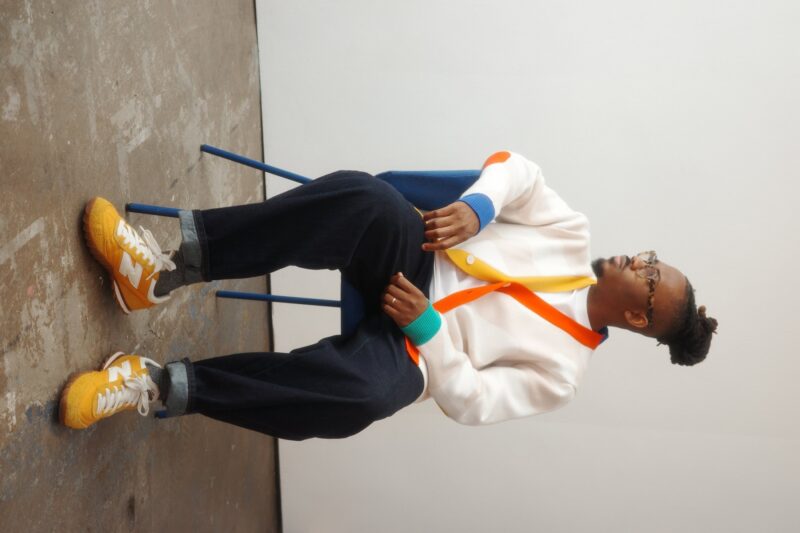
This episode of the DesignThinkers Podcast features Temi Coker, a Dallas-based designer, photographer and the multidisciplinary artist behind Coker Studio.
In conversation with RGD Past-President, Nicola Hamilton RGD, Temi traces a single thread through his entire career: almost none of his biggest opportunities started with a client brief. They started as things he made for no one.
From a self-assigned poster-a-day challenge in 2016 to designing artwork for the Oscars statuette to a full home collection with Walmart that began as a pillow for his own living room, Temi's work is proof that the things you make for yourself are often the things that end up mattering most.
From biomedical engineering to a $375 camera
Temi's path into design didn't start in a design program. Raised in a Yoruba household that had moved from Lagos, Nigeria to Calgary and later Texas, he grew up understanding that "professional" careers meant doctor, lawyer, nurse or accountant. Music was his first real entry point into creativity—he started learning piano around age eight, playing at the churches his father pastored—but when it came time for college, studying music wasn't on the table.
"We didn't come from Nigeria to America for you to go study music," Temi recalls his father telling him. So he chose biomedical engineering instead, drawn to the idea of designing prosthetics that could give people a second chance. A year in, it was clear the fit wasn't right.
"I'm doing this to make my parents happy. I'm not doing this for myself. If my parents pass away, I'm not gonna know who I am, because I'm doing things for other people," say Temi.
What pulled him toward design was almost accidental. Friends kept telling him he had "an eye" for photos he was taking on his iPhone. He scraped together enough money for a Nikon D3100—leaving himself a few dollars in his bank account—and started documenting his college friends, driven by a simple instinct to immortalize the moment. That impulse to make something for no audience but himself would become the through-line of his entire career.
Years later, Temi would design a prosthetic for a young girl through a project with the Scottish Rite Hospital in Dallas—a full-circle moment that brought his abandoned biomedical engineering dream back into his design practice. "It is probably still one of the top five moments in my design career," he says.
A full-circle moment


Teaching what he wished he'd had
After college, Temi went back to teach photography and design at his former high school—not because it was the plan, but because he didn't have a blueprint himself and wanted the next generation to have one.

“I wanted the kids to know that it's possible to have a career. I didn't have a blueprint. There was no one I could look up to while I was in the trenches with my parents, trying to tell them this is the career I want to pursue.”
He was 22, teaching 15-year-olds and staying close enough to the trends to make the classroom feel current. But the lessons went beyond technique. Students ran mock creative agencies using fake money, learning to price their work and understand the business side of a creative career, not just the craft.
That instinct—to demystify the path for people who don't have a map—still shapes how Temi shows up for other freelancers and solopreneurs today. His advice consistently comes back to fundamentals most creative education skips: know your numbers, understand what you need to survive every month and don't let social media convince you that freelancing is either a scam or a fairytale.
"I just want people to be aware of all of these nuances," he says of the freelance-versus-nine-to-five debate, "so we don't start feeling like if you work nine to five, you're a failure, and if you freelance, you're amazing.
The poster a day that changed everything
In October 2016, a friend, designer Magdiel Lopez, dared Temi into starting a poster-a-day practice. Temi was known for photography at the time, with a curated, portrait-heavy Instagram, and worried about what experimenting publicly might cost him.
"I was like, bro, I kinda wanna start that. I wanna be as good in design as I am in photography... And I was like, okay, I'm just gonna start it today, hold me accountable."
What began as a dare became the foundation of his design career. The patterns, textures and instincts he built making a poster a day—often muted at first, before he gave himself permission to be as loud and colourful as the culture he came from—eventually led to work with Adobe, Peloton, Nike, Apple and the Oscars.
"The posters is what got the Oscars, what got me doing some gigs with Adobe, Peloton, Nike, Apple," he says, reflecting on the practice as a pivotal moment in his career—one people had told him wasn't possible, since he'd always been told to pick either photography or design.
He's since built the same ethos into how he mentors others, including through a project called the Department of Creative Equity, born out of conversations with freelance friends who were quietly struggling while their social media suggested otherwise. "Check on your creative friends," as Temi puts it.
The poster-a-day practice


Can I make it black?
That instinct to make the unbriefed, unasked-for thing carried directly into two of Temi's highest-profile projects.
When the Academy invited him to be one of seven artists reimagining the Oscars statuette in 2021, Temi's early designs stayed close to the brief—gold, safe. Then he asked himself a harder question.
Reimagining the Oscars statuette



“What would it feel like if it were black? Because I want people who look like me to see that design that day and be like, "My gosh, that's me. I deserve that.”
Asking wasn't easy. "I was scared, but I said, hey, I would really like to make the Oscars black because I really want people that look like me to see themselves in the work." The Academy's answer surprised him. They told him they didn't want him to shy away from his culture or what he wanted to represent.
The final design, which the Academy used across its television and billboard advertising, became another defining moment of his career, and a public marker of the philosophy underneath all his work: "Black is a beautiful canvas, and I want people that look like me to see themselves in the work that I do."
That same instinct—make the thing you'd want to see, before anyone asks for it—led just as directly to Coker Studio's home collection with Walmart. It started with a pillow. Temi's wife suggested his artwork would look good in people's homes; he made one for their own living room, then 50 more that sold out. Six months later, Walmart reached out with a photo of that exact pillow attached to the brief.
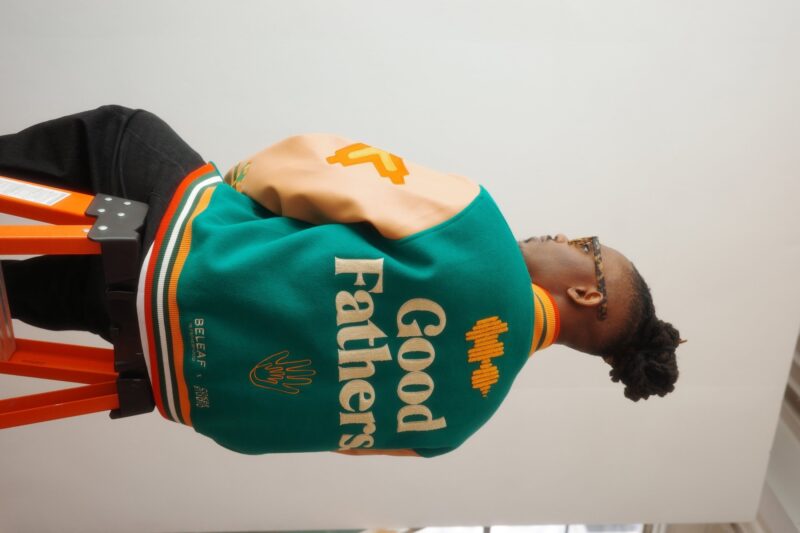
"It's like, I did this because I wanted. I love jackets and I like, what would it look like to have a Temi Coker jacket?" That first jacket led to a Father's Day and Mother's Day varsity jacket collaboration that took off well beyond what he expected.
"You have to believe in what you're creating and just put it out there. If it's meant to be, it'll happen." — Temi Coker
It started with a pillow


Make it exist
Temi's advice for anyone sitting on an unstarted idea comes down to two moves. First: interrogate your thoughts.
"It starts up here in your mind—no one's gonna love that. Why? You have to hold your thoughts captive and see it like a courtroom. There's a prosecutor, and there's a defendant, and you have to show evidence as to why it's not gonna work; 99% of the time, there's not enough evidence—because you haven't even done anything."

“It starts up here in your mind—no one's gonna love that. Why? You have to hold your thoughts captive and see it like a courtroom. There's a prosecutor and there's a defendant, and you have to show evidence as to why it's not gonna work. Ninety-nine percent of the time, there's not enough evidence—because you haven't even done anything.”
Second: let go of perfect. "Done is better than perfect" is the line he repeats to himself now.
"It doesn't have to be perfect. It just has to be done. And once it's done, now you can interrogate what you liked, what you didn't like, the response from people. But you shouldn't be doing it for the response—you should be doing it because you're curious." — Temi Coker
And to anyone worried the idea's already been done: there will never be another you, he says—so that's never a real reason not to try.
"You're one of one. Your perspective matters. Don't let anyone tell you otherwise—not even yourself." — Temi Coker