
Designing with communities, not for them
Episode 3 — DesignThinkers Podcast, Season 4

This episode of the DesignThinkers Podcast features Nu Goteh, Co-founder of Deem Journal and founder of Room for Magic.
In conversation with RGD President Nicola Hamilton RGD, Nu discusses rethinking design as a tool for cultural and systemic change.
From early experiments with Photoshop to leading community-driven design initiatives, he reflects on how his understanding of design has evolved—from self-expression to creating conditions where communities can actively shape their own futures.
This episode is for anyone thinking more critically about their role as a designer—whether early in their career or later as part of a rethinking of what their practice is truly in service of.
From self-expression to systemic thinking
Nu’s entry into design was far from traditional. What began as experimentation with digital tools and image-making quickly became something deeper: a way to communicate and explore ideas.
“I thought that design was an opportunity for me to get girls. That's it — like, spoiler alert, that's not…” share Nu Goteh.
What started as playful image-making evolved into a more meaningful realization: design offered a way to express ideas he couldn’t otherwise articulate.
After more than a decade working in marketing, Nu began questioning how he wanted to show up in the world and what role his work could play in shaping it. That shift reframed design not as output, but as a system of influence—one inherently tied to power, access and representation.
Lessons from Deem Journal
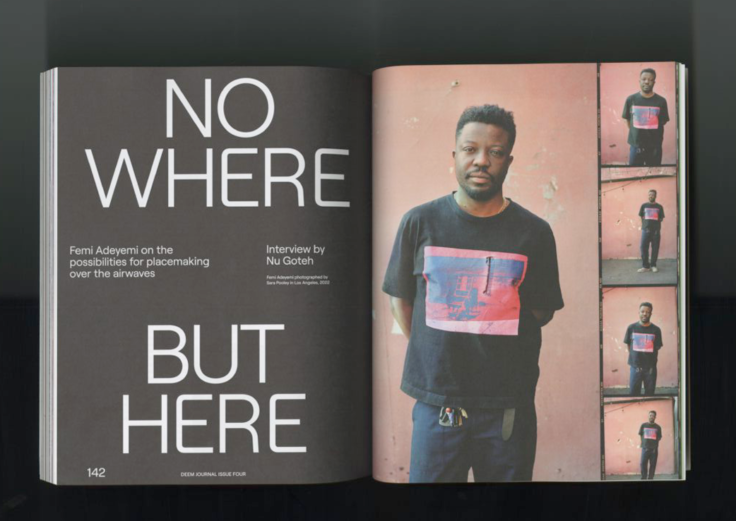
Nu reflects on his work with Deem Journal as a turning point in how he understands design—not as an individual act, but as something deeply rooted in community, culture and lived experience. The journal serves as a platform for dialogue, bringing together voices often underrepresented in mainstream design discourse.
Rather than focusing solely on outputs, Deem challenges designers to reconsider what design.
“If you're only looking at design through the lens of the outputs that you're creating, that's where you're able to skirt around the equity, labour, dignity issues that sit within design… What happens when you orient design away from output and towards something else? For us, that something else was dignity.”
Nu also questions how design is often judged through “fidelity”—how polished or refined something appears—highlighting how access to resources shapes what is considered “good” design.
Through Deem Journal, design becomes less about aesthetics and more about relationships, systems and long-term impact, where storytelling, research and community insight all play a critical role.


Designing systems that serve people
That philosophy extends into Nu’s project work, including a recent collaboration with the Los Angeles Superior Court. The goal was to help young people better understand how the court system works before they encounter it firsthand.
When asked what community engagement looks like in practice, Nu points to the importance of starting with fundamental questions around access and understanding.


“The LA Superior Court were interested in creating a means of educating and engaging high school students and young adults to better understand how the court system works. And part of the conversation that we had was, OK, well, who is this meant to serve? And how is it going to serve them? Because whether you're for the system or against the system, the foundational first step is understanding. In most instances, if you are learning the court system, it's because you are in the court system—and being in the court system isn't the ideal way to learn how it’s supposed to be in service of you.”
Nu Goteh, Co-founder of Deem Journal and founder of Room for Magic
Rather than simply delivering information, the project focuses on understanding the relationship between institutions and the communities they serve. This required stepping back and asking key questions: Who is this for? How does it serve them? What barriers already exist?
For Nu, design at this level is not about creating polished outputs, but about shaping systems that are accessible, understandable and rooted in real needs.


Shifting power through community-led design
Central to Nu’s practice is rethinking participation and moving beyond designing for or even with communities, toward creating conditions where communities lead.
“What happens when we don’t try to invite them to the table, but instead get invited to their table? What are the rules of engagement in terms of how that community functions?”
By grounding design in community insight and lived experience, Nu emphasizes the importance of building trust, understanding shared needs and navigating tensions between stakeholders. Ultimately, this approach reframes the role of the designer—not as the sole creator, but as a facilitator, listener and steward of the communities they work with.
Related Articles



Sponsored


