
Designing Dissent: A decade of protest posters from Iran
Written by Armis Goodarzi RGD, 11th. Floor Design Studio
How designers inside and outside the country turned typography and imagery into tools of resistance.
In moments of political tension, graphic design often moves beyond galleries and studios. It appears on streets, in protest crowds and across social media feeds. In Iran, designers and activists have used posters and digital graphics to respond to protest movements, turning typography and imagery into tools of expression.
In recent years, protests in Iran have generated a distinctive body of graphic work that circulates both locally and internationally. Posters from the 2017–2018 protests, the 2019 fuel price demonstrations and the 2022 Woman, Life, Freedom movement show how designers translate political demands into visual form. For designers, these works reveal how graphic design can function not only as communication but also as documentation of political movements.
From street posters to digital graphics
Political posters have a long history in Iran. During the 1979 Islamic Revolution and the Iran–Iraq War (1980–1988), posters were widely used to promote ideological messages, often combining religious symbolism with illustration and expressive typography.


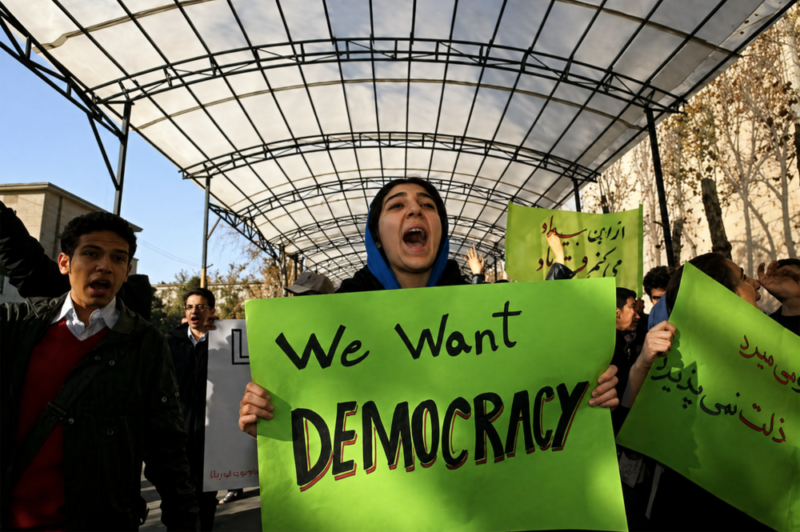 Handwritten protest sign shared online during the 2017–2018 demonstrations Image courtesy of Inklingsnews.com
While posters historically circulated in the public realm, contemporary protest graphics increasingly move through digital platforms, transforming how they are created, shared and archived.
2017–2018: When protest graphics went digital
Nationwide protests in late 2017 and early 2018 marked one of the first major waves of public unrest in Iran during the past decade. Demonstrations began in response to rising economic pressures and quickly spread across several cities. At the same time, the visual language of protest was beginning to shift.
Unlike earlier periods of Iranian poster culture, when professionally designed posters were often printed and distributed physically, relatively few formal protest posters from the 2017–2018 demonstrations were documented. Instead, much of the imagery circulated online. Protesters frequently shared photographs of handwritten signs, street graffiti and improvised banners through platforms such as Telegram and X (formerly Twitter).
These images became a powerful visual record of the demonstrations, spreading rapidly through social media in the early stages of the protests. However, during the nationwide internet shutdown in 2019, communication from inside Iran became heavily restricted, making it significantly harder for images and information to circulate in real time. Many visuals were later shared through diaspora communities, journalists and archived uploads once connections were restored.

Typography still played an important role, but often in informal ways. Slogans written by hand or quickly composed using simple digital tools emphasized clarity and urgency rather than refined design. The message itself became the dominant visual element.
This moment represents an early stage in the transition toward digitally circulated protest graphics. As designers and activists increasingly relied on online platforms to communicate, the poster began to evolve from a printed object into a flexible digital format, one that could be shared, remixed and reproduced rapidly across networks inside and outside Iran.

2019: Designing under an internet blackout
In November 2019, protests erupted across Iran after the government announced a sudden increase in fuel prices. Demonstrations spread rapidly to dozens of cities and were met with a severe state crackdown that killed hundreds of protesters and led to widespread arrests. One defining feature of this moment was the near-total nationwide internet shutdown imposed by authorities for roughly a week, which significantly limited communication and the circulation of images from inside the country.
Because of this blackout, relatively few designed protest posters from inside Iran were documented during the demonstrations themselves. Instead, visual responses emerged shortly afterward through artists, designers and illustrators who created digital graphics reflecting on the events.

Rather than focusing on a single iconic poster, the visual language of this period was shaped by recurring themes. Designers often used restrained colour palettes, particularly red, black and white, to evoke urgency, grief and resistance. Typography also played a central role. Persian slogans were frequently treated as visual forms, with letterforms stretched or layered to intensify emotional impact.
These images show how protest graphics can emerge even when events are difficult to document directly.

2022: The visual language of “Woman, Life, Freedom.”
The protests following the death of Jina (Mahsa) Amini in police custody in September 2022 produced one of the most visible waves of protest graphics in Iran’s recent history.
Designers responded with hundreds of posters and digital graphics that circulated globally. Many centred on imagery related to hair, reflecting acts of women cutting their hair publicly in protest against compulsory hijab laws.

Artist and designer Ernesto Yerena also produced posters in support of the movement, contributing to the international wave of graphic responses shared across social media.
Hair became a powerful visual symbol representing autonomy and resistance. In many designs, strands of hair transform into birds, flames or flowing calligraphic forms.
Designer Ghazal Foroutan created a widely shared poster series responding to the Women, Life, Freedom movement. Her work places the slogan itself at the centre of the composition, using bold Persian typography and limited colour palettes to create posters that are both visually striking and easily circulated online.
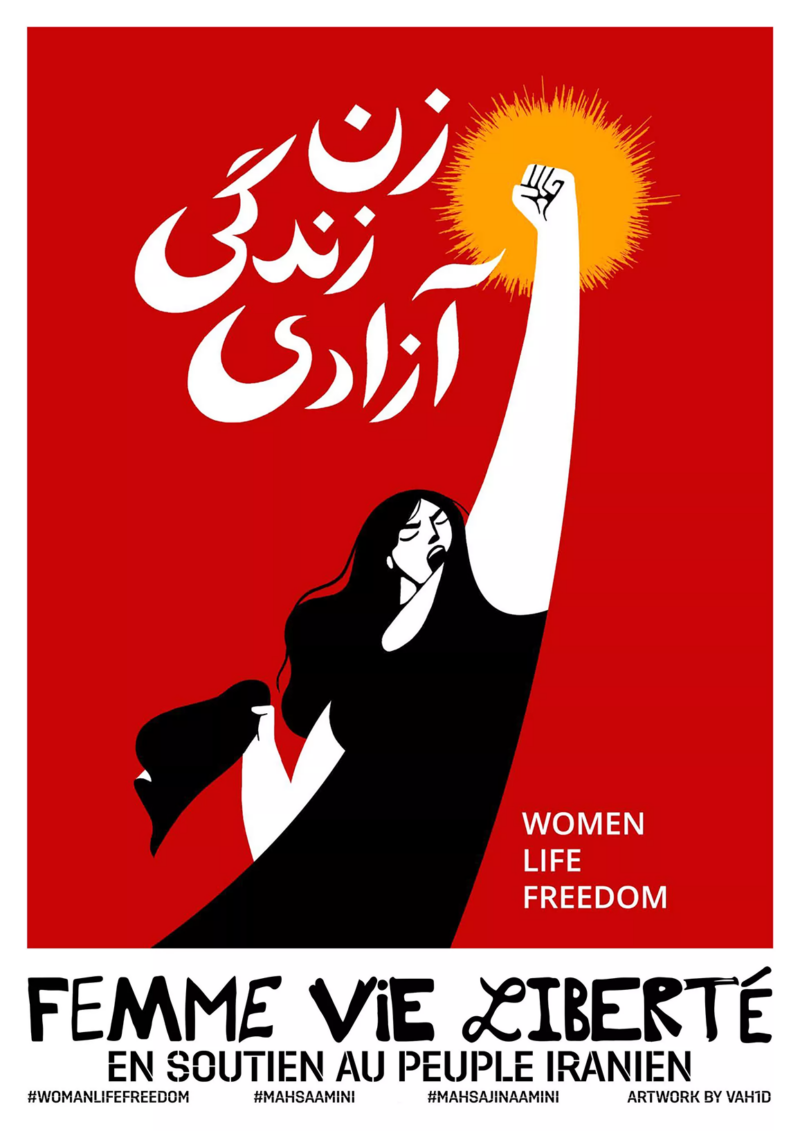 Woman, Life, Freedom poster Image courtesy of Ghaza Raza (https://www.ghazaraza.ca)
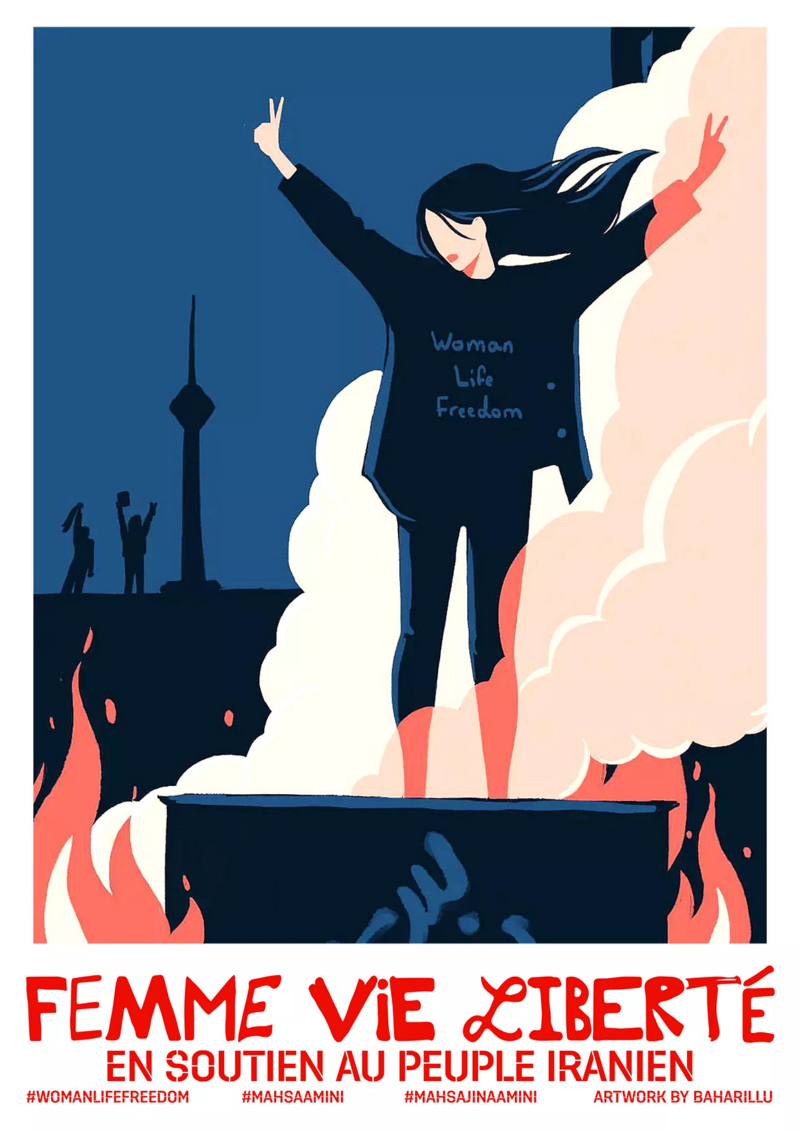 Woman, Life, Freedom poster Image courtesy of baharillu (https://www.instagram.com/baharillu/)
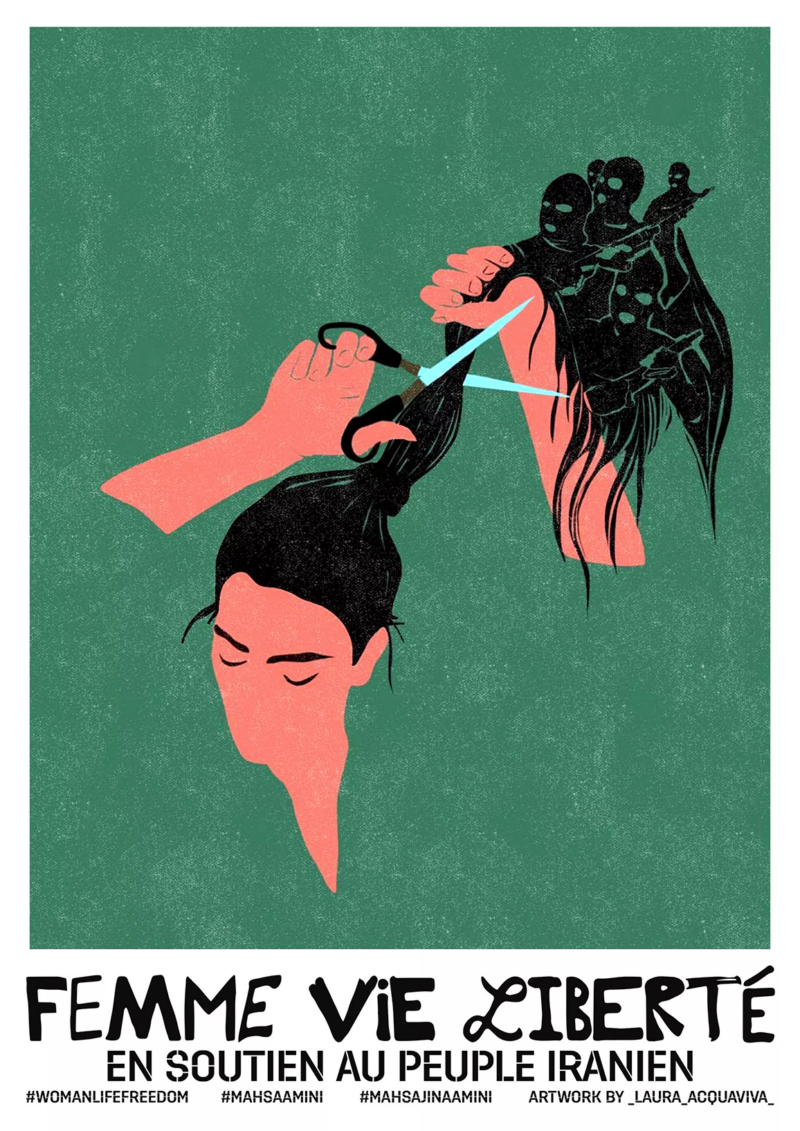 Woman, Life, Freedom poster Image courtesy of Laura Acquaviva. (https://www.lauraacquaviva.com)
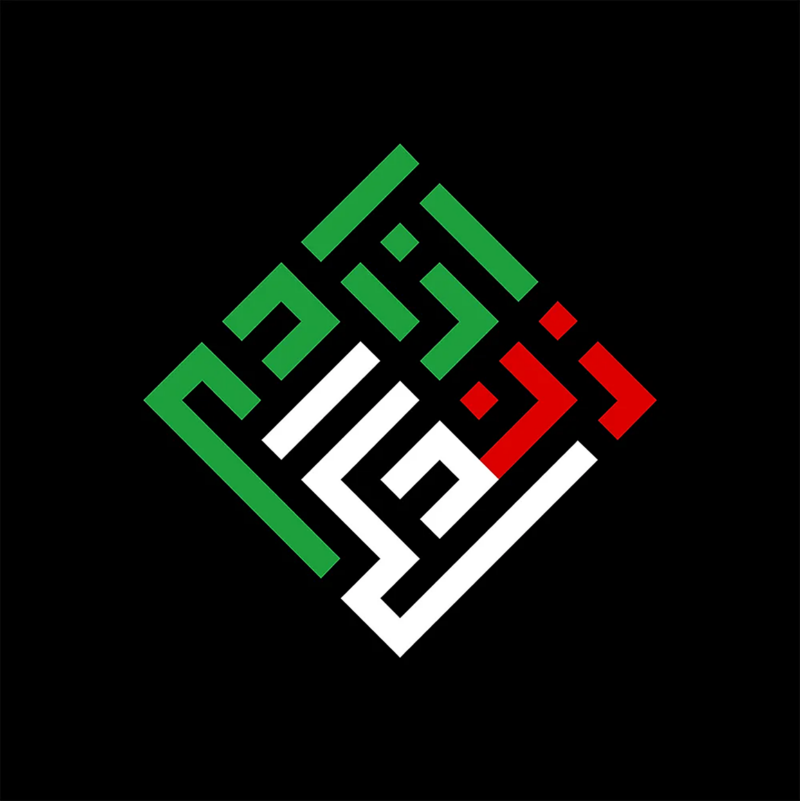 Zan, Zendegi, Azad Logo Image courtesy of Erfan Kooshesh (https://erfesh.com)
Diaspora designers and global visibility
Illustrator Roshi Rouzbehani created a series of artworks responding to the movement. Her illustrations often combine expressive figures, strong colour contrasts and symbolic imagery, helping translate the events in Iran for international audiences.
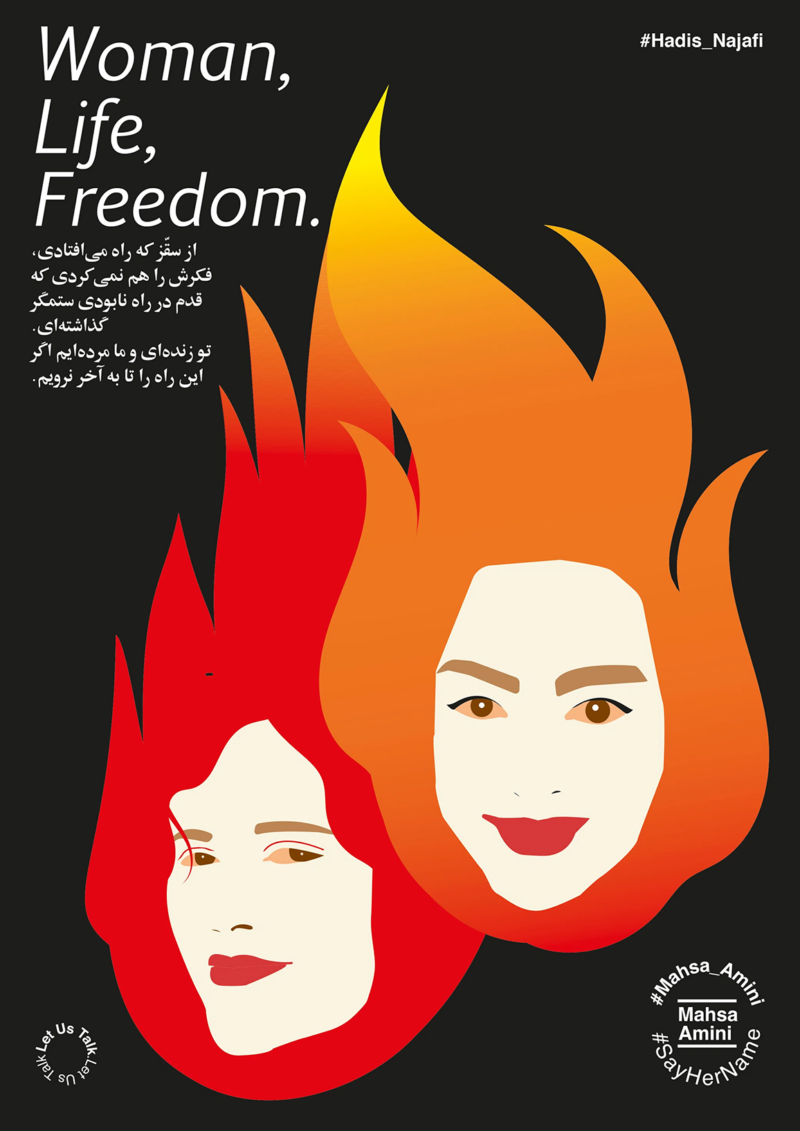 Mahsa Amini and Hadis Najafi portraits Reza Zavvari (https://www.behance.net/apsu) Image courtesy of the artist
Diaspora designers often act as visual translators, connecting events inside Iran with international audiences while maintaining strong cultural references rooted in Iranian visual traditions.
Recent protests have continued to shape how Iranian designers respond to political events. During demonstrations on January 8–9, 2026, internet shutdowns and a severe crackdown limited the circulation of images from inside the country, once again prompting diaspora designers to share visual responses and amplify protest imagery internationally.


Protest, conflict and visual communication
The role of visual communication remains closely tied to current political developments in Iran. Recently, protests have emerged across several Iranian cities amid economic hardship and political tensions. These demonstrations unfolded during a period of escalating conflict involving Iran, Israel and the United States, which further intensified the political climate inside the country.
Periods of conflict often change how political images circulate. In Iran, domestic protests have occurred alongside heightened military tensions, creating an environment where images function both as protest expression and political commentary.
Designers such as Saba Soleymani also contributed digital posters that circulated widely online, demonstrating how younger designers participate in shaping the visual identity of protest movements.
“Your Courtyard had turned into a garden of cypresses, O my heart’s beloved, which of these tall cypresses are you?”

As in earlier protest movements, authorities have often imposed internet disruptions and communication restrictions during demonstrations. These shutdowns limit how images and information move outside the country and make it harder for protesters to document events in real time. Even so, once connections return, images and graphic responses spread quickly through diaspora networks, international media and social platforms.
In this environment, posters and digital graphics do more than support demonstrations. They also help document what is happening. Designers respond not only to events but also to the broader political tensions shaping everyday life inside Iran. Through circulation online, these images become part of how political events are interpreted, shared and remembered.
Conclusion
The role of visual communication is closely tied to what’s happening in Iran today. In recent years, protests have continued to appear across different cities, often driven by economic pressure and political frustration.
Posters and graphics do more than support demonstrations. They help document events and keep the visual memory of these movements alive.
References
- Design by Women. (2022). Iranian Women of Graphic Design.
- Foroutan, G. (2024). Women, Life, Freedom Posters. Victoria & Albert Museum.
- Izadi, D. (2024). The social semiotics behind the 2022 Iranian protest signage. ScienceDirect.
- University of Chicago Library. Graphics of Revolution and War: Iranian Poster Arts.
- The Guardian. (2022). Iranian artists respond to the Mahsa Amini protests.
- Radio France Internationale. (2023). French cultural world launches poster blitz in support of Iranian women.

Armis Goodarzi RGD
11th. Floor Design Studio
Tag
Related Articles


Ava Ahmadi Associate RGD


Ava Ahmadi Associate RGD, Olivia Baker-Sullivan Associate RGD


Laura Stein RGD