
Business Perspectives: Brand handoffs

A brand isn't finished when it launches—it's only as strong as how consistently it gets used after handoff. If the client does not have design expertise in-house, the gap between a beautifully crafted brand and its day-to-day application can be significant.
We asked RGD business owners what they include in their brand handoffs and how they ensure their design remains usable when there are no in-house designers to safeguard it. A few Members share examples of their Brand Guidelines, giving a real-world look at what a thoughtful, client-ready handoff can look like in practice.
Geordie Allen RGD, Principal at C Group
I believe successful handoffs for clients without in-house design expertise start with education. I always emphasize the old adage that consistent application is the fastest way to build brand equity and, conversely, inconsistency is the fastest way to dilute it.
To support this, I provide a comprehensive Brand Standards Guide and a full suite of assets, but the real key is including example mockups. Seeing the brand applied to sample print, digital and 3D environments helps non-designers 'see' the logic in action so they've got something to mimic.
I always check in one and three months after launch. These follow-ups are always well-received; they allow me to answer questions and tweak assets based on how they're actually using them. Beyond immediate results, this method creates a reliable feedback loop. It encourages the client to seek guidance on nuanced issues, ensuring the brand stands a better chance of long-term success.
See the C Group's Brand Guidelines for Food Banks Mississauga
Taralyn Carver RGD, Chief Creative Officer + Partner at BOLD LIP
One of the most important parts of a brand handoff is showing how the brand works in practice. We can define things like logos, colours, typefaces and graphics, but clients need to see how these elements come together in real-world situations. If possible, we're part of the rollout so we can test the system and adjust the rules as needed. When that isn't an option, we focus on making our brand intentions clear. This means explaining not just the elements, but also the reasoning behind them and when to use each one. Visual examples best convey these rules. People usually don't read long documents, but they do learn from examples. The more real-life scenarios we can provide, the stronger the brand will be over time.
We design with the end user in mind and, often, that user isn't a designer. Many brands are managed by marketing teams juggling a lot, so simplicity and flexibility are key. If a system is too rigid or overly complex, it breaks down quickly. We aim to create brands that are hard to misuse: a focused set of colours and type, clear rules and graphic elements that scale and flex without losing integrity. We also set clients up with practical tools: template libraries (often in Canva), pre-selected imagery and plug-and-play assets that remove guesswork. The goal is to reduce decision fatigue and make it easy to produce on-brand work, even without formal design training.


Matthew Clark RGD, Founder & Creative Director at Subplot Design
More than logo or graphic guidelines, our Brand Standards marry the functional aspects of a brand identity and packaging system's visual and verbal application to the high-level brand strategy and other key strategies: visual, voice, communications, marketing, etc. This is not simply a tantalizingly woven brand story; it is actionable and relevant for everyone in the company. As often as possible, we hold an internal brand launch and training sessions with key users and stakeholders of the brand and often include other leave-behinds, from graphic mnemonics of the brand strategy to more elaborate internal brand campaigns.
There always needs to be a balance of rigid standardization and long-term flexibility in any brand and identity system. With less in-house expertise, generally the system needs to have more rigidity to ensure compliance from all users, as well as include a more robust kit-of-parts for use across the company. Typically, this will look like more finished templates for forms and documents, sales materials and presentations, marketing presentations, promotions, point-of-sale, social assets and more. User training and a clear and accessible template and assets library (that is updated as time goes on) is key to making the new system as low-friction for all members of the company—even the ones who like creating their own materials from scratch. In addition, we typically become more woven into the client's ongoing business and are able to respond to requests outside of the anticipated standards.


Armis Goodarzi RGD, Founder, Director at 11th. Floor Design Studio
At 11th Floor Design Studio, a brand handoff is designed to make clients feel confident using their brand independently. I focus on three essentials: a clear and concise Brand Guide covering logo use, typography, colour and tone; a set of ready-to-use templates for common touch points like social media and presentations; and an organized library of assets in accessible formats. I also include a short brand summary to reconnect the visuals to purpose and strategy.
For clients without in-house design support, simplicity is key. I avoid overly technical language, provide practical examples and walk them through how to use the system in real-world scenarios. The goal is to create a flexible, easy-to-use framework that supports consistency while allowing the brand to evolve naturally over time.
See the 11th Floor Design Studio's Brand Handoff for Creative Blue Spirit Studio
Meggan van Harten RGD, Co-CEO at Design de Plume
A strong brand handoff is grounded in usability, not just polish. We build design systems that align with a client's actual capacity. If a team works in Canva, the system should live there. Meeting clients where they are ensures the brand systems are adopted. Equally important is education: walking teams through how and why the system works. This creates confidence, consistency and longevity.

Jim Hopkins RGD, Principal Creative at Baytek
A solid set of Brand Guidelines is essential. At a bare minimum, it should have a brand statement (definition, mission, vision), brand attributes (culture, tone etc.), logo versions (and where and when to use them), colour palette(s) (with tints/shades info), typography (primary/secondary and back-up font families), photography treatment, design elements (patterns, icons, illustrations etc.) and finally instructions on how and where to use the file formats of the logo you have provided. The more guidelines you give, the better the chance the client will stick to them. The looser the guidelines, and the more holes there are, the greater the chance they (or other vendors) will start to take liberties.
Beyond the Brand Guidelines, I would encourage the provision of a set of messaging guidelines (with a voice system and key messages) as well as digital templates that the client can work with (Figma, Canva, etc.). The latter does require some level of expertise, but with instructions and training, it can be possible to ensure the brand remains usable long after launch.
See the full Baytek Brand Guideline.

Amy LeClair RGD, Owner at Amy LeClair Graphic Design
I don't see a brand handoff as the finish line. It's about making sure someone can actually use what we've built without hesitation. A clear, practical Brand Guide is key. It should answer real questions like which logo to use, how colours work together and what feels on brand in everyday use. File organization matters just as much. If folders are confusing, the brand won't be used properly. Everything is labelled and structured so it's easy to navigate. I also include a few starting points, like templates or sample layouts, so clients aren't starting from scratch. And I always walk them through it. Even a short conversation helps connect the dots and builds confidence moving forward.
I think about usability from the start. If a brand feels complicated, it won't be used consistently. I keep things focused and intuitive so clients can make decisions without second-guessing. I also design for real situations like social posts, emails and quick updates. Templates help, as long as they are simple and flexible. They give structure without making things feel restrictive. I also let clients know they can reach out after launch. They may not need ongoing support, but having that option helps keep things on track. For me, a successful brand is one that still looks consistent months later because it was easy to use from day one.
See the four brand examples Amy shared below.
- Amy LeClair Graphic Design's Brand Guidelines for Stumpin' Tom's Forestry Services
- Amy LeClair Graphic Design's Brand Guidelines for Susan Bowie Sales Representative
- Amy LeClair Graphic Design's Brand Guidelines for Kawartha-Haliburton Children's Foundation
- Amy LeClair Graphic Design's Brand Guidelines for Arctic Goose Program
Sonya Lyon RGD, Founder & Lead Designer, Brand and Marketing Design at Sentrik Creative Studio
A strong brand handoff goes beyond simply delivering files. It gives clients the clarity, confidence and support they need to use their brand well after launch. That handoff includes a clear Brand Guide, well-organized assets, practical direction for print and digital use and accessibility built into the system from the start. It also means taking the time to walk the internal team through what has changed, how to use the files and how to apply the brand consistently across everyday touch points such as templates, email signatures and digital communications. If budget allows, editable templates can make adoption easier and reduce guesswork. Follow-up matters too. Questions often come once teams begin using the brand in real situations. A successful handoff is not just about transferring assets but about building trust and skill in the brand's use and helping clients feel supported.
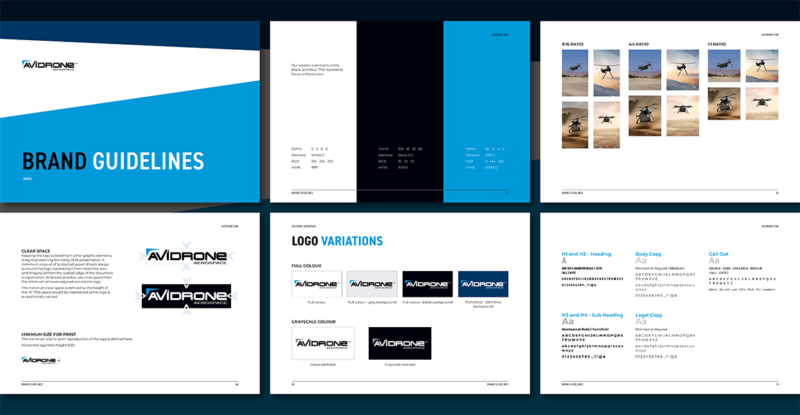 Avirdone brand guidelines
Nick Richards, Founder, Chief Creative Officer at Will
A successful brand handoff starts with understanding the client's internal reality. What are their existing capabilities, capacity and areas of expertise? Think of it as a thorough internal assessment, essential for minimizing risk and ensuring the client truly owns the brand. This leads to a much better long-term understanding. While comprehensive Guidelines are foundational, the handoff must be tailored to the business' specific focus, systems and processes. It also needs to reflect how much freedom the team has to adapt and grow their new visual identity.
Ultimately, documentation alone isn't enough. Nothing replaces collaborative engagement—actual face-to-face time. At WILL, we prioritize hands-on experiences like customized brand onboarding sessions and visual identity and voice workshops, because they create rich, engaging learning environments, much more effective than just emailing a giant PDF or sharing a URL for online guidelines. When budgets allow, an ongoing brand guardianship role also provides effective support, ensuring the team gains the necessary confidence, engagement and deep ownership to champion the brand well beyond launch.
When a client doesn't have in-house design expertise, the brand identity can't rely on a beautiful, nuanced idea. It has to be a functional, fail-proof tool for non-designers. The key is simplicity, in concept and application. If it takes more than a minute to explain, we've failed. At WILL, we emphasize creating highly robust, usable creative platforms that translate across a client's media and platform realities—built for today, future-proofed for tomorrow.
In these instances, the client handoff shifts focus from creative inspiration to the brand logic and strategy underpinning the identity and tone of voice. This empowers the wider team to make consistent decisions based on why the brand exists, not just how it looks. The goal is to make good decisions inevitable. An ongoing brand guardianship role in these instances is invaluable. With no internal design check, a continued engagement with a creative partner is a necessity, not a luxury. It ensures small, necessary adaptations are managed by trusted professionals before inconsistencies grow into a costly, off-brand mess.
Nico Taus RGD, Creative Director at Studio123
We equip clients with everything they need to start creating marketing materials immediately. While we remain available for guidance after launch, our goal is to empower independence, not create reliance.
Each client receives a comprehensive suite of logo assets, including multiple colour variations, formats, orientations, iconography and versions with or without descriptors or slogans—optimized for both digital and print. We also provide a living digital standards guide that evolves with the brand. This centralized online resource ensures consistency, supports future hires or partners and prevents outdated files from being lost or misused.
When needed, we extend the brand into practical applications, developing collateral such as slide decks, social media templates, leave-behinds, signage and merchandise to bring the brand to life across key touch points. We often work with entrepreneurs without in-house marketing teams, where marketing is a secondary responsibility. We design tools with their day-to-day realities in mind, focusing on simplicity and efficiency. Given the rising cost of Adobe products, we prioritize cost-effective solutions built in platforms that clients already use. Canva, in particular, is widely adopted and highly effective for marketing needs. We create custom branded templates, such as social media assets and slide decks, tailored to each client's brand guidelines. These templates are flexible, easy to use and come with a much lower learning curve than traditional design software. We also monitor how clients use them and provide ongoing recommendations, refining or expanding templates based on what's working well and where additional support is needed.


Tag
Related Articles


Meggan van Harten RGD, Vida Jurcic RGD, Elia Kanaki RGD, Jean-Pierre Lacroix RGD, Carolyn Shaw


Samiksha Makhijani RGD, Deanna Loft RGD, Reesa Del Duca RGD, Allison Charles, Crispin Bailey RGD


Meggan van Harten RGD, Vida Jurcic RGD, Elia Kanaki RGD, Jean-Pierre Lacroix RGD, Elana Rudick RGD, Amanda Spencer RGD
Sponsored


