
The Essence of Multi-sensory Design: Felt, remembered, connected
Written by Susan Yang RGD, Padometric Studio
Multi-sensory design is about multiple points of entry, multiple senses interacting simultaneously, where content is not confined to a single medium.
The experience approach creates an emotional connection, serving as a bridge or orchestrator between nostalgia and future recollections, shaping concepts and developing innovative and accessible products. While technology and design trends continue to evolve, our fundamental desire for transformative experiences remains constant.

“I've learned that people will forget what you said, people will forget what you did, but people will never forget how you made them feel.”
Maya Angelou

“Design the experience for each of the senses independently before you synthesize. Think of each sense as a track in a complex polyphonic composition. You control the mixing board, moving the focus and designing the overlap and interaction of sensory experience for maximum emotional impact.”
Bruce Mau, Designing LIVE: A New Medium for the Senses
The senses (sight, sound, touch, smell and taste) are unique to each person and mix with personal memory, where a design can turn the intangible into something you felt, remembered or connected with. Multi-sensory design blends two or more senses to support the diversity of the human condition and human interaction. The combinations of sensory inputs can change each other, create cross-connections between each other and create inclusive, immersive spaces for health and well-being.
Multi-sensory design focuses on balancing combinations of senses to craft comprehensive and memorable experiences that shape how people feel and remember an interaction with a brand, product or space. Each sense plays a role, and when two or more are combined, they mutually change one another:
- Sight: Visual elements such as colour, typography and imagery which set the visual hierarchy and guide attention with visual storytelling.
- Sound: Auditory elements such as voice, music and ambient or nuanced sounds can impact perception, create atmosphere and elicit emotional responses.
- Touch: Tactile elements such as texture, weight and materials contribute to the user experience, providing interaction, navigation and realism.
- Smell: Scents and fragrances can create ambience and evoke a memory or emotion that adds to a user's perception of a brand or experience.
- Taste: Taste influences flavour perception and interacts with the other senses to trigger emotions such as comfort and nostalgia.
Below are some examples of multi-sensory design in action that balance sensory engagement and anchor memory and retention.
Shifting the act of seeing
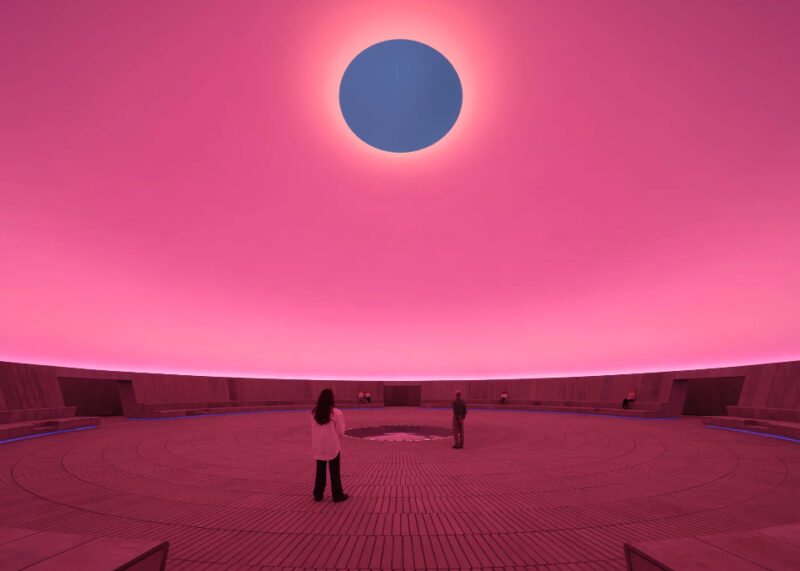 As Seen Below – The Dome, a Skyspace | Photo Credit: Florian Holzherr

“I use light as a material, but my medium is actually perception. I want you to sense yourself sensing—to see yourself seeing.”
James Turrell, Contemporary Artist, “Master of Light”

“My work has no object, no image and no focus. With no object, no image and no focus, what are you looking at? You are looking at you looking.”
James Turrell, Contemporary Artist, “Master of Light”
Renowned light artist James Turrell created a Skyspace, “As Seen Below – The Dome,” as an immersive experience at the Aros Aarhus Art Museum. His work transforms the sky, inviting visitors to experience the light as tangible, as a physical presence, that creates an active meeting of light, space and personal senses. The experience features three operating modes—Open Sky, Colour Shift and Twilight—as distinct states of light and perception.
Throughout his practice, James achieves amplified perception in controlled spaces as a multi-sensory experience through lighting techniques, architecture, multimodal setups and cognitive science. The impact of blurring the boundary between where space ends and light begins lets the viewer become part of the art and experience new sensations, contemplation and emotions.
Feel, look and hear typography
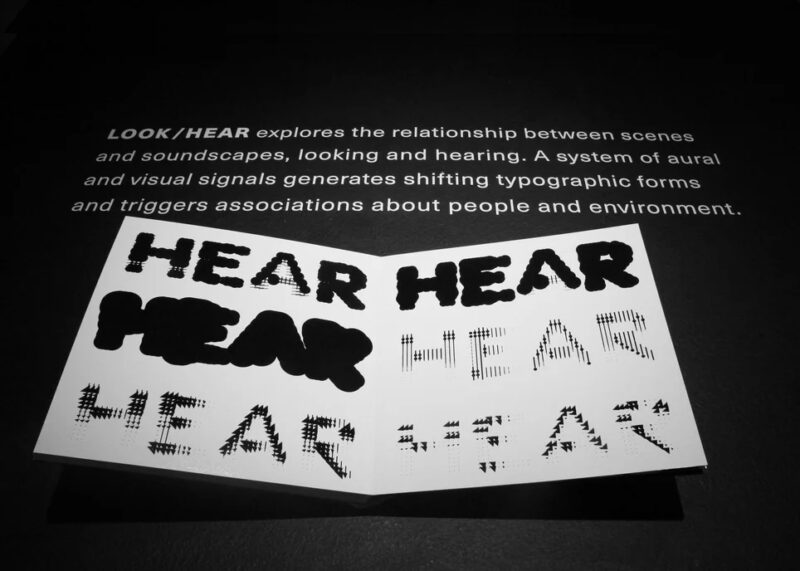 LOOK/HEAR Exhibition | Photo Credit: Ran Zheng

“A system of aural and visual signals generates shifting typographic forms and triggers associations about people and environment.”
Ran Zheng, Freelance Art Director, Creator

“I call architecture frozen music and I like to call type forms frozen sound. In order to build a connection between typeface and sound, I designed a complete visual system based on the sound data. You can see how different sounds manifest as dramatic shifts in shape which then change the appearance of the actual letter.”
Ran Zheng, Freelance Art Director, Creator
Ran Zheng's project “Look/Hear” explores the relationship between looking and hearing by using sound to affect 3D typographic forms. Her letters as 3D geometry create a system of real-time morphing with the letters, where different sounds trigger reactions and associations. Using sound scenes from everyday life (a park, a street, a café, a subway and an office), you can experience city noise translated interactively on typography—real-time altering of the scale, shape, weight and curvature of letterforms.
By treating typography as fluid and adaptive, where we interpret sound individually, a multi-sensory experience is encountered. When the letters dynamically alter and shift, they become signifiers of emotion, mood and environment, which associate connections and familiarity.
Creative playground of visible-invisible
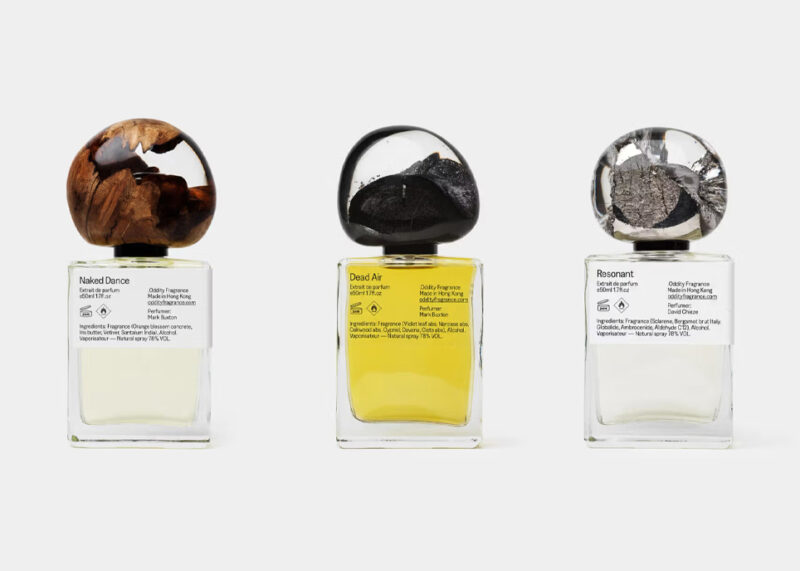 .Oddity Perfume Bottles | Photo Credit: .Oddity Fragrance

“It is inspiring—you can't see smell, yet it is a magnificent driver of inspiration that provokes vivid images in your mind. It can be different each time and never the same between different people.”
Alice Mourou, Co-Founder & Creative Director, .Oddity Fragrance
“It is our ultimate answer to the question ‘where your inspiration comes from’—for us, it is always on the edge where different forms of art are influencing each other, in this case, visible and invisible.”
Alice Mourou, Co-Founder & Creative Director, .Oddity Fragrance
.Oddity Fragrance, a contemporary niche perfume house, presents more than just a product but an immersive multi-sensory experience, triggering inspiration and stretching the senses. Smell is not perceived the same way by every individual but draws from one's own intangible moments, memories and associations.
.Oddity perfume bottles are topped with unique caps crafted by hand, where the bottle itself lends itself to the beauty of imperfections, being a bridge to the scent. Each fragrance guides toward a particular scent impression while leaving room for individual meaning based on our physical and emotional worlds.
Building flavour through the senses
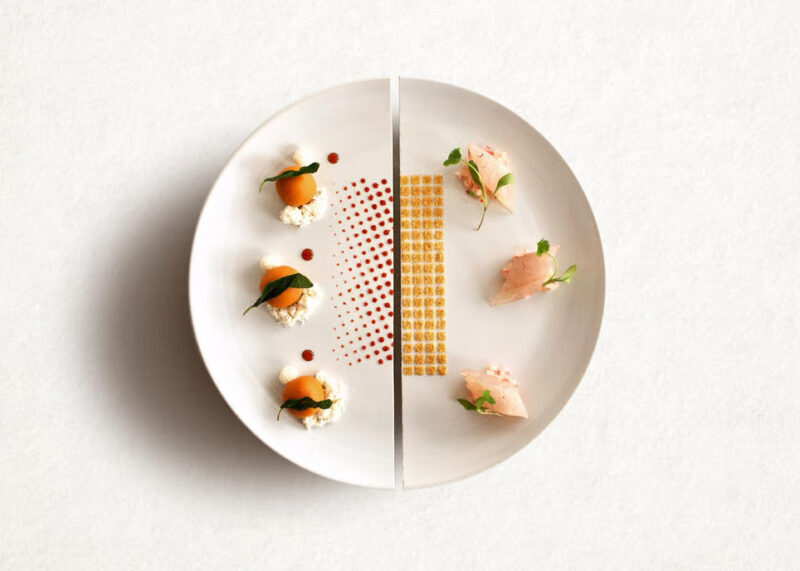 Bouba & Kiki Dish Composition | Photo Credit: Kitchen Theory

“We don't perceive flavour in the mouth; we perceive flavour in the brain.”
Jozef Youssef, Founder & Creative Director, Kitchen Theory

“This means that two people can eat the same dish, made from the same ingredients and served in exactly the same way, yet experience something subtly or dramatically different. Taste is, therefore, one of the most hyper-personalized sensory experiences we have. Which obviously raises an interesting question for chefs: what does it really mean to say that a dish is “perfectly balanced”?To which I would say balance isn’t simply a fixed property of the food. It is a relationship between the food and the person experiencing it.”
Jozef Youssef, Founder & Creative Director, Kitchen Theory
Kitchen Theory, a leading culinary design studio, explores multi-sensory gastronomy through immersive experiences and how multi-sensory design transforms the way we experience food. Our relationships with food are formed through our unique makeup of memories, senses and experiences. At Kitchen Theory, inspired by a study by psychologist Wolfgang Köhler, the Bouba & Kiki dish composition splits the plate into two sensory profiles: Bouba is rounded, sweet and fatty while Kiki is sharp, acidic and crisp. The two contrasting halves create a cross-modal correspondence with the idea that you can “taste shapes.”
Merging culinary arts with design, psychology and neuroscience, this approach to food uses all five senses to form a sensory relationship that shapes our perception of flavour. In a multi-sensory dining experience, every aspect of a meal, from the sounds, smells and settings to the stories, shapes how we experience food.
Cultivating relaxed alertness
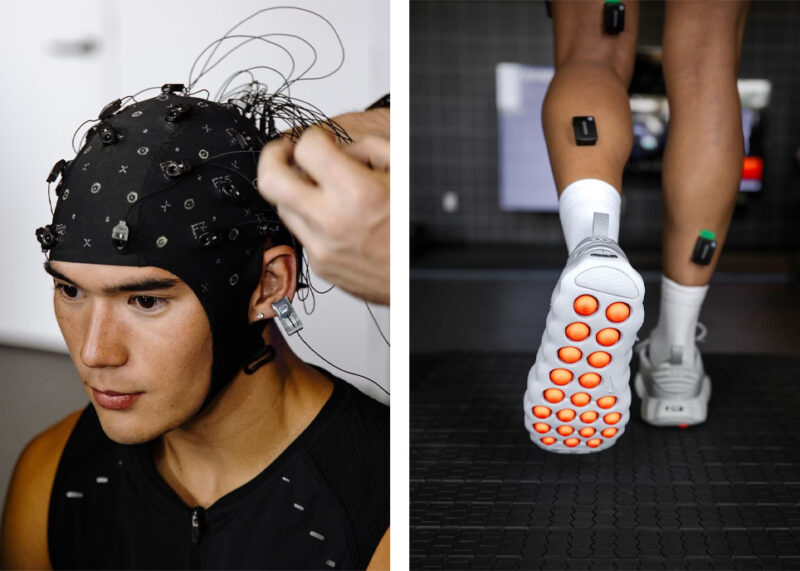 Nike Mind 001 | Photo Credit: Nike
“One of the easiest ways to get out of your head is to get into your body to actively engage your senses. With Nike Mind, what we see in the brain is increased activity in the sensorimotor network and a rise in alpha oscillations linked to relaxed alertness.”
Graeme Moffat, PhD, Principal Researcher, Nike Sport Research Lab

“What I love most about this new technology is that it represents the unknown. It's a reminder that performance isn't only about going faster. It's about feeling more, thinking deeper and reconnecting with the moment.”
Eric Avar, VP, Creative Director, Innovation, NIKE, Inc.
Nike Mind Technology, developed by Nike's Mind Science Department, is a neuroscience-based footwear platform designed to support pre-game routine and post-game recovery for athletes. The footwear functions as a tactile touch interface consisting of 22 anatomically mapped foam nodes on the soles of the shoes, activating sensory receptors to enhance mind-body connection.
The unique sensation felt through the feet stimulates the senses and sharpens mental focus through tactile feedback. The tactile design encourages the athlete to slow down, find balance and be present in the moment. With research and examination of how cognitive readiness integrates with physical performance, the footwear was designed thoughtfully in every material and detail to enhance the sensory experience with every step. Instead of communicating speed or forward motion, it has a "directionless" aesthetic that lends itself as a reminder to slow down.
Susan Yang RGD
Padometric Studio
Related Articles


Sponsored