
10 films that see the world the way designers do
Written by Yurko Gutsulyak RGD, Gutsulyak.Studio
One of the most important design skills is the ability to see things in a unique, unexpected way. Creating a “fresh look” comes from noticing subtle connections—connections that have yet to be pointed out. I would describe design as a process in which analysis sparks inspiration and inspiration, in turn, provokes analysis. This creates an everlasting loop.
Below are 10 films that are not about design itself, but are guided by a design-thinking approach. Beyond being entertaining, they offer inspirational, educational and thought-provoking perspectives on this way of thinking.
Flatland: The Movie (2007, Directed by Dano Johnson and Jeffrey Travis) and Flatland: The Film (2007, Directed by Ladd Ehlinger Jr.)


Most designers spend a lot of time working with simple geometric shapes, seeking to express emotions and meaning through basic forms like circles and squares. We worship simplicity and believe our designs exist as independent, self-sufficient worlds. We argue that one circle differs entirely from another, each symbolizing nearly opposite concepts.
These films tell the story of a two-dimensional world inhabited by geometric figures striving to understand the meaning of life and make new discoveries. Both adaptations are based on Edwin A. Abbott’s novel Flatland, sharing the same core premise while differing in storytelling and visual style.
Renaissance (2006, Directed by Christian Volckman)
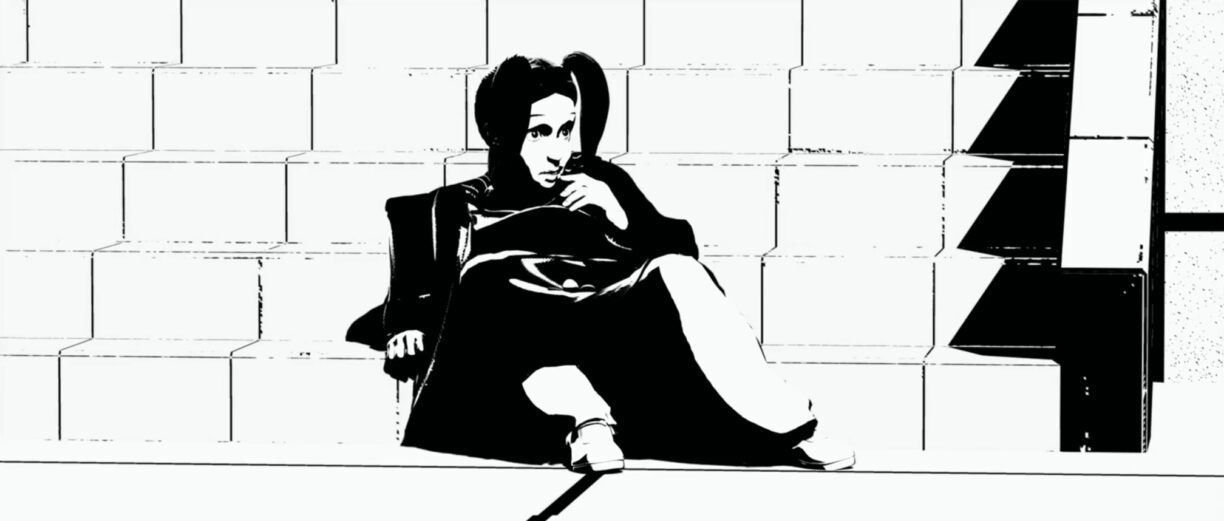
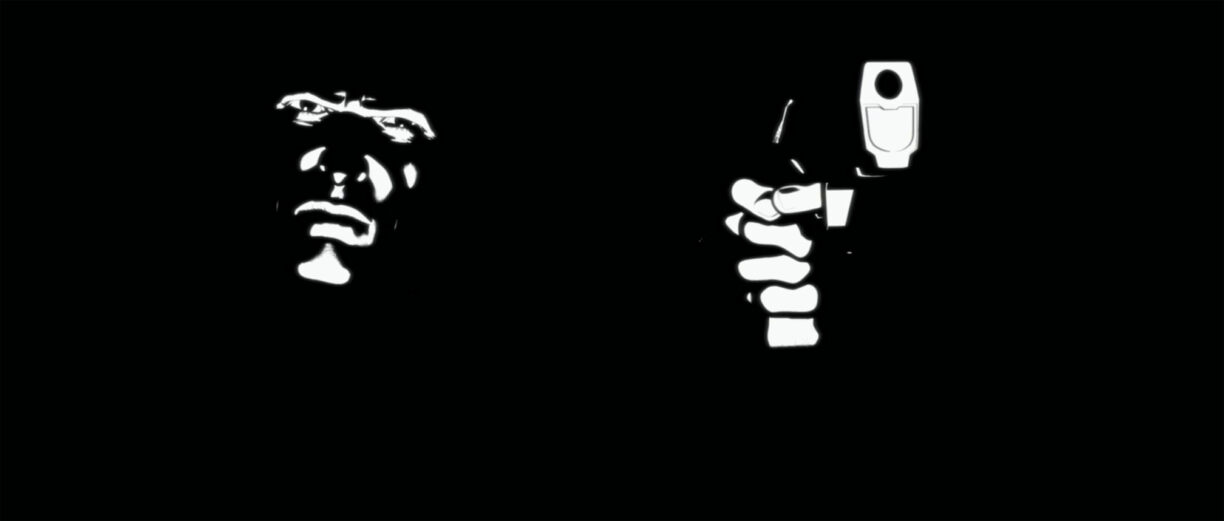
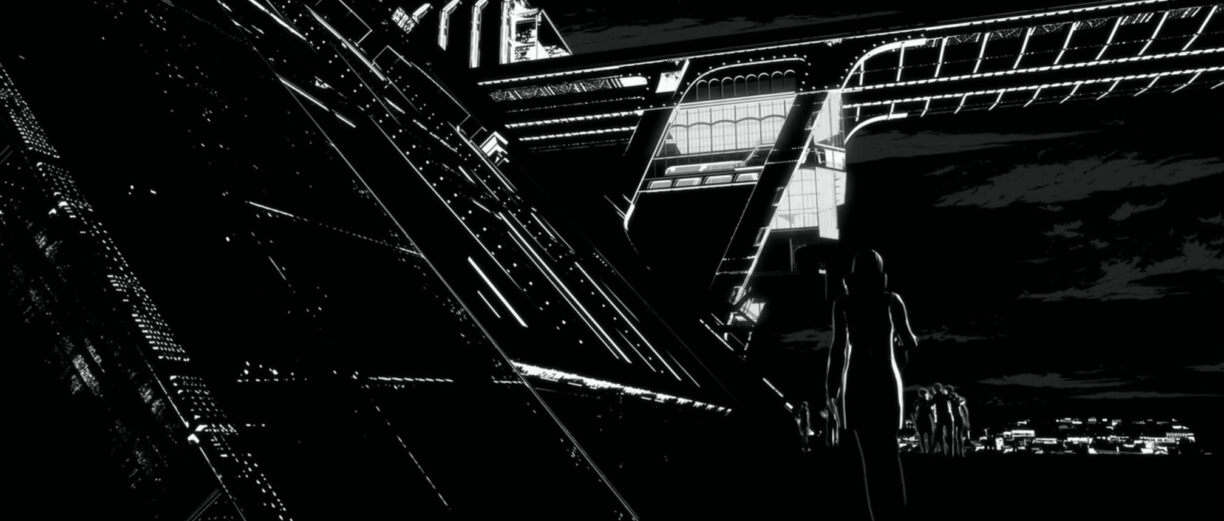
This film is perhaps one of the finest examples of a graphic novel brought to life, captivating viewers with every meticulously crafted scene. Visually, it is all about graphic beauty. The production took nearly six years, combining 3D animation with motion-capture techniques.
Despite its age, Renaissance remains visually extraordinary and even futuristic. The film also reflects some design trends of its era, such as the swirling floral motifs popular in the 2000s, allowing viewers to observe how graphic aesthetics evolve over time. However, do not expect hidden messages; the plot and star-studded cast serve mainly as a backdrop for the film’s visual world.
The Five Obstructions (2003, Directed by Lars von Trier)


What I find most fascinating about this film is its metaphorical take on a design brief and the challenges of working within constraints. The story presents total creative freedom as a punishment rather than a gift.
The film follows a conversation between a “student” and a “teacher," in which the student repeatedly forces the teacher to remake his past masterpiece under increasingly absurd restrictions. Yet the teacher embraces each constraint as an opportunity. This dynamic mirrors the relationship between a demanding client and a designer committed to delivering quality work despite limitations.
To fully appreciate The Five Obstructions, I recommend watching Det perfekte menneske (1967, Directed by Jørgen Leth) first.
The Pillow Book (1996, Directed by Peter Greenaway)


This film unfolds more like a beautifully-designed book rather than a traditional motion picture, creating the sensation of turning pages as you watch. It is an elegant story about calligraphy, communication and love.
In The Pillow Book, graphic symbols and their meanings take precedence over human life itself; they are the very essence of existence. Here, the human body becomes a canvas for artistic expression. Even decades after its release, the film’s technique of layering images within images still feels contemporary. To fully enjoy it, immerse yourself in a calm, contemplative setting.
The Color of Pomegranates (1969, Directed by Sergei Parajanov)


This poetic film serves as an encyclopedia of beauty and inspiration for any visual artist. Each frame is a carefully composed image, making the entire film feel like a carefully curated art gallery.
The plot is simple—it tells the story of the 18th-century Armenian poet and troubadour Sayat-Nova. However, The Color of Pomegranates is far more than a historical drama. It is a landmark of world cinema that has influenced countless renowned filmmakers. Its influence on modern pop culture is also evident in Madonna’s "Bedtime Story" and Lady Gaga’s "911" music videos.
Double King (2017, Directed by Felix Colgrave) and Throat Notes (2020, Directed by Felix Colgrave)


Both of these animated shorts take viewers on bizarre, psychedelic journeys filled with mesmerizing characters and surreal scenarios accompanied by experimental music.
Beyond their distinctive artistic style and toy-like charm, these films showcase unrestrained creativity. As a designer, you can learn how to construct complex metaphors from the simplest elements and extract new meanings from seemingly nonsensical combinations.
The Adventures of Prince Achmed (1926, Directed by Lotte Reiniger)


This is the oldest surviving animated feature film, originally titled Die Abenteuer des Prinzen Achmed. Directed by Lotte Reiniger, a pioneer of silhouette animation, it remains visually striking and conceptually innovative a century after its creation.
Based on One Thousand and One Nights, the film captivates with its intricate graphic beauty and mysterious visual effects. Reiniger’s pioneering approach demonstrates how limitations can become a source of invention: working primarily with silhouettes, she created an extraordinarily rich visual world through shape, movement, light and shadow.
Logorama (2009, Directed by François Alaux, Hervé de Crécy and Ludovic Houplain)


This Oscar-winning animated short tells a crime story using only corporate logos and mascots. Every character, prop and setting in Logorama is composed entirely of famous brand identities.
The film has become legendary in the advertising world, cleverly demonstrating how branding shapes our visual landscape. More than 2,000 historical and contemporary logos were used to craft its narrative. Logorama serves as a brilliant reminder of the power and pervasiveness of brand identity.
The Son of the White Mare (1981, Directed by Marcell Jankovics)


While designers often shape the future, they must also engage with cultural heritage. This task can be challenging — how does one reinterpret tradition without resorting to outdated clichés?
The Son of the White Mare offers a masterful example of how pre-Christian mythology, associated with the Scythians, Huns and Avars, is reinterpreted through psychedelic animation and electronic music. The film transforms ancient cultural material into something strikingly modern, demonstrating how tradition can be revived without simply reproducing its original visual language. Its ornamental and symbolic style evokes woodcuts, creating a distinctive atmosphere and charm. Despite being more than four decades old, it remains visually striking and contemporary.
Playtime (1967, Directed by Jacques Tati)


Jacques Tati turns architecture, signage, furniture, reflections, typography, movement, light and human behaviour into one giant visual system. The film looks almost illustrated rather than filmed, with every element of the frame carefully composed. The viewer has to observe rather than simply follow a conventional plot. It is essentially a masterclass in seeing relationships between objects, people and space. Unlike many of the films on this list, Playtime demonstrates a designer’s way of thinking primarily through spatial observation rather than graphic style.

Yurko Gutsulyak RGD
Gutsulyak.Studio
Related Articles


Yurko Gutsulyak RGD


Yurko Gutsulyak RGD


Sponsored