Top 5 Japanese graphic design trends of 2025
Written by Priscilla Rosales Associate RGD, Digital Main Street
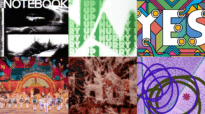
Japanese graphic design is admired for balancing constraint with experimentation. In 2025, that balance became more dynamic. Rather than simply reviving traditional Japanese aesthetics, contemporary Japanese designers are reinterpreting them for an increasingly digital and international audience, combining geometric abstraction, expressive typography, tactile materials, digital movement, regional identity and playful visual storytelling.
The following five trends are based on a review of selections from 2025 competitions and events, including the Japan Graphic Designers Association (JAGDA) annual awards, the Japan Package Design Awards, Tokyo Midtown Design Hub exhibitions and notable contemporary projects. JAGDA's Graphic Design in Japan 2025, for example, selected roughly 560 works from about 1,800 submissions, making it a particularly abundant snapshot of the country's professional design landscape.
Here are the top five graphic design trends emerging from Japan this year:
Geometric abstraction meets expressive typography
One of the clearest characteristics of Japanese graphic design in 2025 was the fusion of typography with abstract form. Rather than treating words as secondary information, designers frequently made letters themselves the primary visual image.
A particularly strong example is Noriaki Hayashi's series of recruitment posters for Joshibi University of Art and Design. Hayashi received the 27th Yusaku Kamekura Design Award for the latest work in this long-running series. The posters build visual compositions around the letter "J", transforming it into geometric, almost calligraphic forms. JAGDA praised the work for its symbolic abstraction, consistent visual language and ability to remain fresh while developing an identity over many years.

This approach demonstrates an important principle of contemporary Japanese typography: readability does not necessarily mean visual neutrality. Japanese characters, Latin letters, symbols and geometric shapes can coexist as equal components of a composition.
The same tendency can be seen in Ryoji Tanaka's JAGDA award-winning poster series "REC AND COPY Promo Only," where an enlarged cassette-tape sleeve becomes the foundation of an unusual typographic composition. JAGDA notes that the upside-down orientation resulted from simply enlarging the unfolded cassette sleeve rather than correcting its orientation.
Minimalism becomes tactile and material
Minimalism remains important in Japan, but in 2025 it is becoming less about simply using space and more about creating a physical experience. Designers are using paper texture, restrained colour palettes, subtle printing techniques and carefully considered packaging structures to make simple designs feel richer.
The 2025 Japan Package Design Awards strongly support this direction. The competition received around 1,000 entries, with 35 works ultimately receiving awards. POLA COSMOLOGY's packaging won the Grand Prix, while other recognized designs demonstrated sophisticated approaches to form, colour, typography and material.

The aesthetic is deliberately calm: soft colours, generous negative space, simple brush-like marks and limited typography. Yet the designs do not feel empty. Instead, the package's physical qualities become part of the visual communication.
This reflects a broader Japanese design sensibility often associated with "ma" (written as 間), or meaningful space. In 2025, however, ma is being combined with contemporary packaging technology and brand strategy. The result is minimalism that feels warmer, more sensory and more premium.
Regional identity and local visual languages
Another important 2025 development is the movement away from a Tokyo-centric understanding of Japanese design. Graphic designers across Japan are increasingly drawing from the characteristics, histories, landscapes and communities of their own regions.
The Japan Graphic Designers Association's JAGDA Exhibition 2025 brought together 40 designers representing eight regions: Hokkaido, Tohoku, Kanto-Koshinetsu, Tokyo, Chubu, Kansai, Chugoku-Shikoku and Kyushu. Tokyo Midtown Design Hub described the exhibition as an opportunity to visualize the diversity of contemporary Japanese design rooted in different places.

This trend is significant because it challenges the idea that Japanese design has one universal "look." Instead, designers are exploring local crafts, dialects, food, architecture, natural environments and community stories.
For designers outside Japan, the lesson is clear: cultural specificity can strengthen a visual identity. Rather than borrowing generic "Japanese" motifs, contemporary designers are increasingly interested in authentic local narratives.
Graphic design moves into motion and digital space
Japanese graphic design in 2025 is also becoming increasingly fluid. Posters, logos, websites, videos and physical identities are no longer necessarily separate design categories. Graphics are expected to move, respond, transform or adapt across different screens and environments.
JAGDA's 2025 awards clearly demonstrate this shift. Its winning categories included Digital Media and Video, alongside traditional posters, books, packaging and logos. The digital-media award went to the Shupatto brand site, while Norio Nakamura's "Dance of the Earth" won in the video category.

The Osaka Art & Design 2025 program offered another example through Katsunari Shishido's illustrated alphabet, which explored what letters might look like if they "danced", turning a hiragana character into a rotating three-dimensional visual form.
The implication is clear: Japanese graphic design is expanding beyond the static page. Motion, interaction, animation and digital environments are becoming part of the designer's basic vocabulary.
Playful surrealism and everyday "kawaii" humour
Alongside minimalism and sophisticated corporate design, 2025 also shows a strong appetite for humour, surprise and playful reinterpretations of ordinary objects. This is a contemporary extension of Japan's long-standing relationship with kawaii culture, but the approach is often more understated and conceptual than simply making something cute.
A memorable example is Tokyo-based designer Ippei Tsujio's Bakermee wrapping paper. Released in 2025, the project makes wrapped presents resemble freshly baked bread. Three designs imitate a baguette, Danish pastry and Japanese shokupan. Textured paper enhances the illusion by giving the surface a bread-like tactile quality.

Bakermee illustrates how contemporary Japanese design can turn an everyday activity into a small visual joke. The concept is simple, immediately understandable and memorable—qualities that are increasingly valuable in a visually saturated environment.
The most interesting Japanese graphic design trend of 2025 may ultimately be the combination of opposites. Designers are pairing minimalism with tactility, tradition with technology, typography with abstraction, regional culture with global communication and sophisticated design systems with humour.
The 2025 JAGDA selections reinforce this diversity: the association's annual collection spans posters, packaging, logos, editorial design, digital media, video, spatial graphics, advertising and integrated design.
For designers internationally, Japanese graphic design offers an important lesson: innovation does not require abandoning cultural identity. Some of the strongest work of 2025 comes from taking familiar ideas—letters, packaging, local symbols, everyday objects—and seeing them differently. The result is graphic design that is visually distinctive while remaining functional, human and deeply connected to its context.

Priscilla Rosales Associate RGD
Digital Main Street
Hello, my name is Priscilla and I am a recent graphic design graduate from Centennial College as of April 2023. As a junior graphic designer with 2+ years of combined educational and internship experience, my core values are to assist others with making their passions become a reality. With a background in the visual arts, e-commerce, and digital marketing, I understand how design interacts with the client and the consumer. Ensuring that elements are easily accessible, understandable and clear through graphic and branding strategy is what I strive to accomplish. This drives me to push beyond the limits to bring another’s vision to life. With creative problem-solving, I endeavour to continue evolving in the design industry.