
Resource List: Ethical approaches to designing for difficult histories
Written by Yuliya Fedorovych RGD
When we speak of “difficult histories,” we refer to histories of war, genocide and mass violence, events shaped by immense human suffering and often obscured by denial.
Visually communicating these histories is an ethical responsibility that demands sensitivity to those whose lives were marked by violence and to those who encounter these stories. To communicate it with integrity, designers must uphold three essential principles: accuracy, care and purpose. Accuracy protects truth through careful research and verification, ensuring that what is shown remains faithful to the complexity of events that took place. Care brings ethical and emotional awareness, reminding designers to consider how their work affects both those whose experiences are represented and those encountering them. It transforms communication into an act of empathy and respect. Purpose connects these efforts to meaning by asking what the work seeks to achieve and how it can foster awareness and responsibility. Together, these principles define what it means to share difficult histories with honesty, sensitivity and intent.
The following resources offer practical ways to uphold these values in visual communication. They gather models, frameworks and guides that help designers translate principles of accuracy, care and purpose into methods for research and visual storytelling. Each provides a perspective on how to represent difficult histories with ethical awareness and responsibility.
Dignified Storytelling Principles
Dignified Storytelling Initiative, 2021

Dignified Storytelling Principles establish an ethical foundation for working with the stories of others. Created in 2021 in collaboration with the United Nations Office for Partnerships and a global network of humanitarian and communication experts, the framework outlines ten principles that emphasize agency, consent, respect and accountability.
These principles offer practical guidance for building trust and equity in the storytelling process. They remind us that representation is never neutral and that every design choice influences how people and their experiences are perceived. By centring collaboration, transparency and informed consent, the principles ensure that those whose stories are shared remain participants and not the subjects in the narrative.
When applied to difficult histories, these principles help designers navigate the challenges of communicating suffering without spectacle and to preserve the dignity of those represented even in their absence. In this way, the Dignified Storytelling Principles become a practical tool for transforming remembrance into an act of respect and accountability.
The Little Book of Design Research Ethics
IDEO.org, 2018

The Little Book of Design Research Ethics outlines practical guidance for conducting research with respect and accountability. Research sits at the core of communicating difficult histories—to tell these stories with accuracy and care, designers must engage deeply with the people, places and records connected to them, often within contexts marked by trauma or inequality. This makes ethical awareness essential.
The book offers a clear framework for approaching this work with sensitivity and transparency. It helps ensure that evidence is gathered responsibly, that participants’ voices are treated with dignity and that creative outcomes remain faithful to lived experience. For designers working with histories of violence and oppression, it provides both a moral compass and a practical guide for building truth and trust into the foundation of their work.
Contextual Model of Learning
John Falk & Lynn Dierking, 2000

The Contextual Model of Learning reframes learning as a relational process shaped by the interaction between personal, sociocultural and physical contexts. First introduced in The Museum Experience, the model describes how people make meaning by connecting what they already know with what they encounter.
This framework helps designers understand how audiences approach and interpret complex material. It draws attention to the factors that influence engagement, such as prior knowledge, emotional readiness and cultural background. By considering these conditions, designers can shape experiences that meet audiences where they are and make complex narratives more legible and resonant.
The model also emphasizes the importance of emotional context in learning. It invites sensitivity to audiences who may have lived experiences of trauma and supports design choices that allow for reflection without harm. Through this lens, storytelling becomes a process of shared understanding in which information, emotion and environment work together to build empathy and insight.
A Practical Guide to Trauma-Sensitive Research: Integrating Trauma-Informed Frameworks into the Qualitative Research Lifecycle
R. Alman, 2024
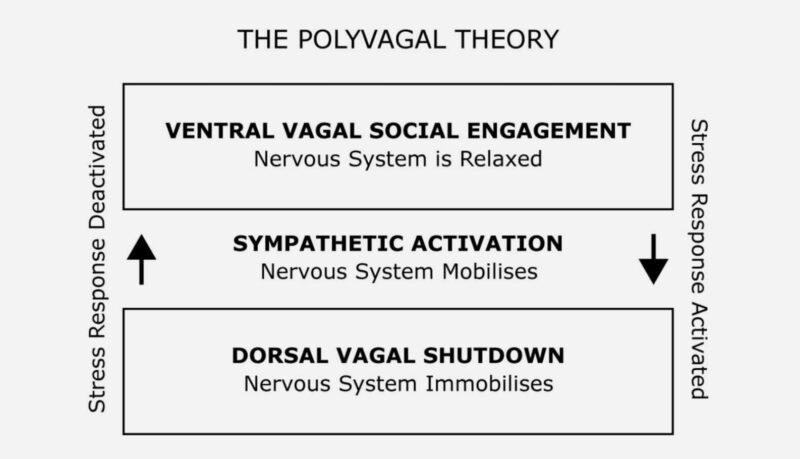 Credit: Alman, R. (2024). A Practical Guide to Trauma-Sensitive Research: Integrating Trauma-Informed Frameworks into the Qualitative Research Lifecycle. Routledge.
The Practical Guide to Trauma-Sensitive Research introduces trauma-informed, practice-based guidance for working with sensitive subjects and participants. Although written for researchers, its approach aligns closely with design methods that rely on interviewing, observation and storytelling.
The book offers strategies for conducting inquiry with attentiveness to how people recall and share painful experiences. It shows how the structure of research, including the questions asked, the pacing of dialogue and the interpretation of narratives, can influence trust and emotional safety. By treating inquiry as a shared process rather than an extraction of information, it models ways to maintain clarity while protecting participants from harm.
This guide strengthens ethical awareness at every stage of the creative process. It encourages reflection, transparency and collaboration that values lived experience. Through this approach, it demonstrates how responsible research can deepen understanding, support empathy and help transform complex histories into work grounded in respect and integrity.
Inzovu Curve
UX for Good, 2014

The Inzovu Curve helps designers and storytellers construct emotionally balanced narratives that guide audiences from empathy toward reflection and action. The model was developed through UX for Good’s collaboration with the Kigali Genocide Memorial in Rwanda, where researchers observed that visitors often left the exhibits feeling overwhelmed and hopeless. The name comes from the Kinyarwanda word inzovu, meaning elephant, chosen for its association with endurance and memory.
The curve maps the emotional journey of an audience engaging with difficult histories. It begins with anticipation, moves into pain and empathy, reaches a point of reflection and then rises into compassion, hope and action. The model shows how emotional engagement can evolve into understanding and a sense of responsibility. It provides a structure for shaping experiences that acknowledge suffering while leading audiences toward connection and awareness.
The framework informed the structure of my film My Name is Eugenia Sakevych Dallas, which tells the story of a Holodomor survivor. It guided the emotional progression of the narrative, helping it move from pain and empathy toward reflection and agency. The curve offered a way to balance emotional intensity with a sense of purpose, allowing audiences to confront the magnitude of loss while recognizing their capacity for compassion and social action.
Together, these frameworks remind us that visual communication is not only a creative act but also a moral one—an ongoing commitment to empathy, accuracy and care.
Further reading:
Museums and Mass Violence
Book by Paul Morrow & Amy Sodaro, 2022
A collection of case studies from museums worldwide that examines how institutions succeed or fail in communicating histories of genocide, state violence and collective trauma.
Regarding the Pain of Others
Book by Susan Sontag, 2003
A critical reflection on spectatorship that explores how images of suffering shape public consciousness.
Content Warnings in Museums and Galleries: Taking a Proactive Approach
Blog by J. Armstrong for the American Alliance of Museums (AAM), 2023
An overview of how museums can use content warnings as tools for audience care—preparing visitors for difficult material without prescribing emotional response
Design Justice: Community-led practices to build the worlds we need
Sasha Costanza-Chocк, 2020
A study of community-led design that centres to equity, inclusion and collective accountability.
Curating Difficult Knowledge: Violent Pasts in Public Places
Book by Erica Lehrer, Cynthia E. Milton, & Monica Eileen Patterson, 2011
Strategies for representing histories of violence and trauma with care, accuracy and critical reflection.
The Ethics of Remembering and the Consequences of Forgetting: Essays on Trauma, History and Memory
Book by Michael O’Loughlin, 2014
Examines how collective memory and trauma shape understanding, offering insight into designing experiences that foster reflection and responsibility.
Tags
Related Articles


Stephanie Strawbridge RGD, John Furneaux RGD, Eric Forest RGD, Raymond Cheah RGD, Ian Chalmers RGD